 English
 Kinyarwanda

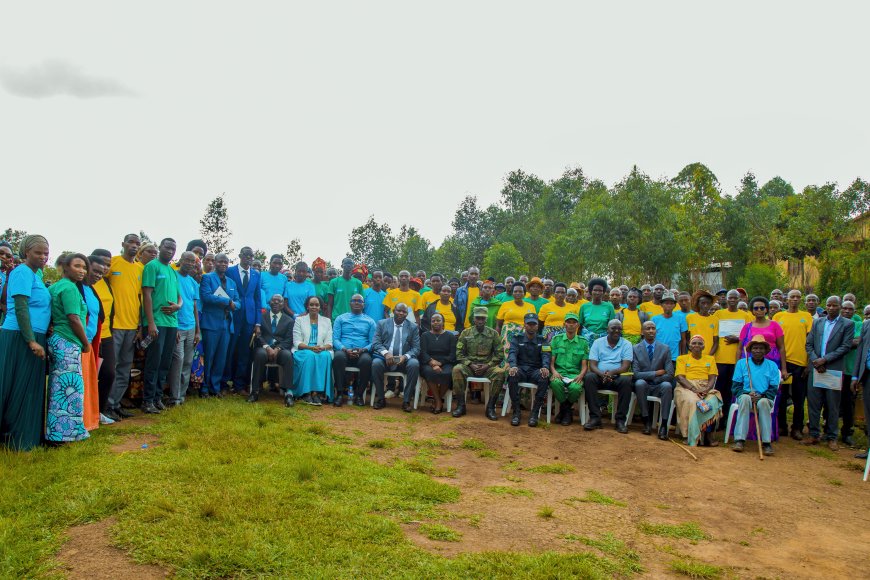
Over 170 graduates embrace forgiveness through ADEPR healing programme in Rwanda
Francois Rwasibo, a resident of Agatare Village on the outskirts of Kigali City in Jali Sector, Gasabo District, vividly remembers the day his life took a dark turn in 1994. He recalls attending a meeting at the sector office where he and others were told that Tutsis had joined the Inkotanyi (rebels) and were planning to kill them. Their leaders urged them to “pre-empt” the Tutsi and prevent the attack.
Standing at the Jali Sector grounds on March 27, Rwasibo’s voice now carries a new resonance.
He is among a group of 173 genocide survivors and perpetrators who gathered to “Celebrate Forgiveness” after graduating from healing groups established by the ADEPR (Association of Pentecostal Churches in Rwanda) Church in their communities.
The event marked the culmination of a programme launched in November 2025 by the ADEPR Church in partnership with Tearfund, designed to foster “unity, healing, and resilience.”
The programme has been active across the cells of Nkusi, Muko, Nyamitanga, and Nyaburiba, aiming to address the deep-seated emotional wounds that persist 32 years after the 1994 Genocide against the Tutsi.
By bringing together those who committed genocide crimes and those who survived, the initiative rebuilt a social fabric that was once nearly destroyed.
Speciose Mukandera, a survivor of the 1994 Genocide against the Tutsi, admitted that she was initially skeptical of the process. She recalled that in the early sessions, the teachings did not seem to reach her heart. To her, it felt like “business as usual”, an expectation to return home and coexist without genuine resolution.
“I realised then that while some wounds are visible on the body, others are carried deep within the heart,” Mukandera said.
She explained that she had long carried both physical and emotional burdens, often staying home sick for months without informing anyone, despite requiring daily medication from University Teaching Hospital of Kigali (CHUK).
As the programme progressed, her perspective began to change.
“I became filled with a sense of forgiveness so profound it surprised me,” she said. “I discovered that those I had categorised as ‘the others’ were also broken. I found that they were hurting too—perhaps even more than I was. We were all wounded, but we have found the remedy together.”
By “others,” she is referring to genocide perpetrators and, often, their families.
Rwasibo, a genocide perpetrator how attended the same healing group with her, recounted the mobilisation that led to the killing of Tutsi in his village. He described a vehicle arriving from Rutongo Commune carrying grenades and guns, which were then distributed.
“Those of us with machetes headed toward the local clinic where the Tutsi had gathered,” he recalled. “We surrounded the area from all sides, above, below, and through the forest, and we attacked.”
Rwasibo added: “I stand here today to sincerely ask for forgiveness from the Government of Rwanda, from all Rwandans, and especially from the families who lost their loved ones in those attacks. I ask this from the bottom of my heart, with the vow that such evil must never happen again.”
Olivier Bizimana, Director of Tearfund, noted that the Church has a critical role to play in addressing the country’s tragic history.
He acknowledged that while not all churches stood firm during the genocide, the current steps taken by ADEPR are vital for national healing.
“This journey of emotional healing is not a one-day event; it is a process,” Bizimana said.
Addressing the participants, he urged them to serve as witnesses as the country approaches the 32nd commemoration.
Rev. Isaie Ndayizeye, General Overseer of ADEPR church, emphasised the value of human life and the possibility of restoration. He described the history of the genocide as rooted in “poor leadership” that promoted division and hatred, leaving behind a devastated population still carrying emotional wounds.
“Healing is a journey,” Rev. Ndayizeye said, “and it reminds us that as long as one is alive, what has been endured can be cleansed.”
He noted that the programme’s graduates now have the strength to contribute to building the country rather than destroying it.
According to him, celebrating forgiveness is not only about confronting the past, but also about shaping and strengthening national unity.
“Today is not the end; it is the beginning of a life of resilience,” he said, encouraging participants to strengthen savings groups they have created and support one another to secure a better future for themselves and their children.
This conviviality event took place just days after the Church stripped 35 pastors and evangelists of their clerical responsibilities upon confirming their involvement in the genocide, a move Rev. Ndayizeye said was intended to uphold the integrity of the institution and honor the teachings of Scripture.
Jean Pierre Gakwaya, who oversees the National Itorero Programme in Gasabo District, observed that many of those giving testimonies were only 19 or 20 years old during the genocide.
“At that time, they were the nation’s strengths, but they were used as instruments of destruction,” Gakwaya said.
He noted that although they are now elders, their most important role is to speak to the youth.
Gakwaya emphasised that the health of the community depends on the healing of every individual.
“If your neighbor is not healed, you are not truly healed either,” he said, calling on residents of Jali to ensure that genocide ideology finds no place in their community.