 English
 Kinyarwanda

U.S.-Iran Talks Begin in Islamabad as High-Level Delegations Arrive

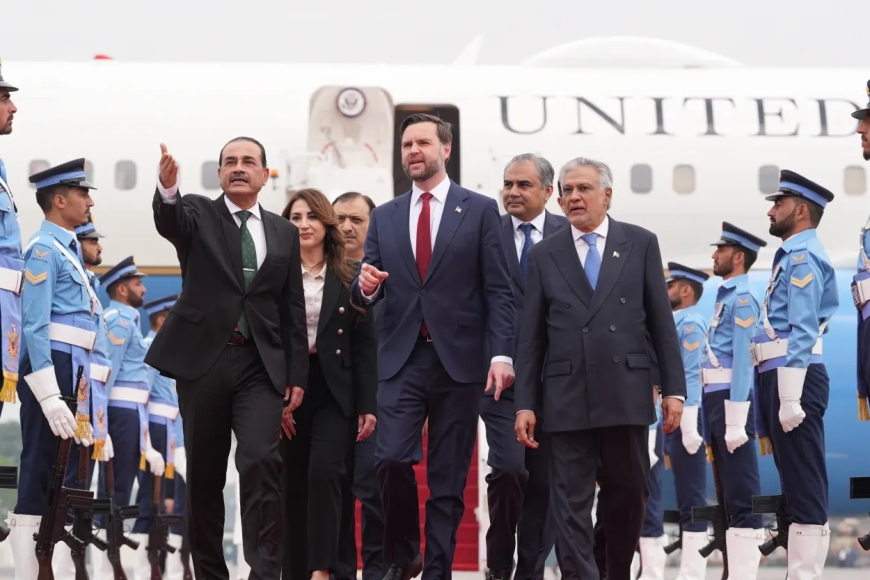
High-level U.S. and Iranian delegations have arrived in the Pakistani capital for a new round of diplomatic talks aimed at easing tensions and advancing efforts toward regional peace, according to official statements from Pakistan Government.
A U.S. delegation led by Vice President J.D. Vance, alongside Special Envoy Steve Witkoff and Jared Kushner, landed in Islamabad on Friday and was received by senior Pakistani officials, including Deputy Prime Minister and Foreign Minister Senator Mohammad Ishaq Dar, Chief of Defence Forces and Army Chief Field Marshal Syed Asim Munir, and Interior Minister Syed Mohsin Raza Naqvi.
Welcoming the delegation, Dar praised what he described as Washington’s commitment to pursuing “lasting regional and global peace and stability,” expressing hope that the discussions would be conducted constructively. He reiterated Pakistan’s readiness to continue facilitating dialogue between the parties to reach a “durable solution to the conflict.”
Pakistan’s Prime Minister Shehbaz Sharif also met Vice President Vance as the Islamabad Talks formally got underway. According to a statement from the Prime Minister’s Office, Sharif welcomed the willingness of both sides to engage and said he hoped the process would serve as “a stepping stone toward durable peace in the region.” He reaffirmed Pakistan’s continued role in supporting diplomatic efforts.
The Iranian delegation, led by Foreign Minister Abbas Araghchi and parliamentary speaker Mohammad Bagher Ghalibaf, also arrived in Islamabad ahead of the negotiations. Pakistani officials confirmed that both delegations were in the capital for discussions aimed at consolidating a fragile ceasefire and addressing broader regional security concerns.
According to CNN, the talks come amid ongoing diplomatic activity, including separate meetings between Pakistan’s leadership and both U.S. and Iranian representatives ahead of the main negotiations. The report also noted parallel diplomatic efforts involving Lebanese and Israeli officials expected to meet in Washington in the coming days to discuss a potential ceasefire arrangement.
However, uncertainty continues to cloud the process. Iranian officials have indicated that negotiations cannot proceed without what they describe as prior conditions being met, including a halt to Israeli strikes in Lebanon and the release of Iranian frozen assets. Tehran has also accused Washington of failing to fully implement elements of an earlier ceasefire understanding.
Despite these tensions, U.S. Vice President Vance expressed cautious optimism before departing for the talks, telling reporters he expected the discussions to be “positive,” while warning Iran not to “play games” in the negotiation process.
The Islamabad Talks are seen as a critical diplomatic effort to stabilize a volatile situation that has raised global concern, particularly over energy security and regional escalation risks. Pakistan has positioned itself as a neutral facilitator, urging all parties to pursue dialogue over confrontation as negotiations continue