
Climate change and displacement: A growing test for peace

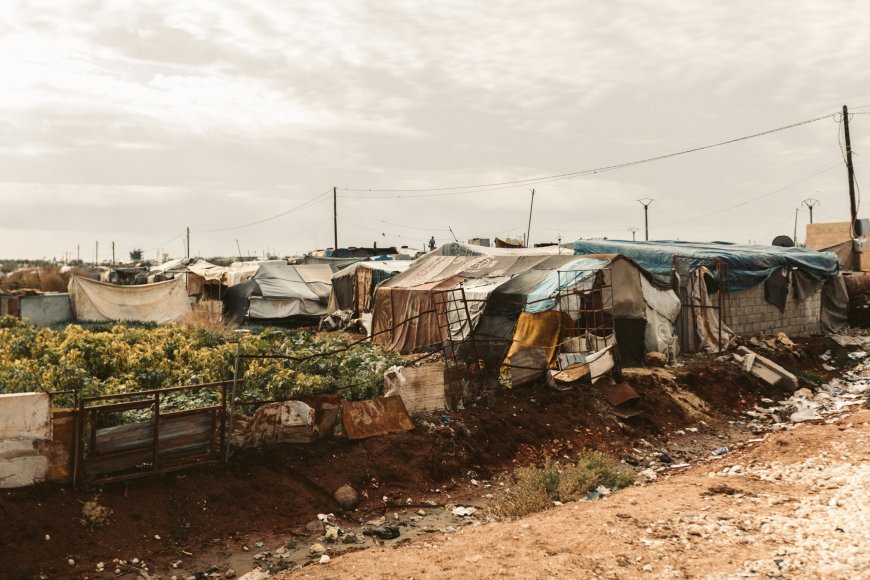
Refugee camp in Syria. Photo: Abd Alrhman Al Darra / pexels

Climate change and displacement: A growing test for peace

Jul 30, 2026 - 16:07
 0

As the world marks the 75th anniversary of the 1951 Refugee Convention, peacebuilding experts are urging governments to confront a growing humanitarian crisis that the landmark treaty was never designed to address: people forced to flee their homes by the combined impacts of climate change and conflict without ever crossing an international border.


According to Berghof Foundation, internally displaced persons (IDPs) have become one of the fastest-growing groups of displaced people worldwide, yet they remain without a binding global legal framework comparable to the Refugee Convention.

While the Convention protects refugees who cross international borders, millions displaced within their own countries rely largely on voluntary international guidelines or regional agreements that often lack sufficient enforcement and funding.

The scale of the challenge is growing rapidly.

The global number of IDPs has more than doubled since 2018, reaching a record 83.4 million people across 117 countries and territories in 2024. Climate change is increasingly driving this trend by intensifying droughts, floods and competition over scarce natural resources, forcing families to leave their homes while remaining within national borders.

The World Bank estimates that up to 216 million people could become internal climate migrants by 2050, with significant population movements expected well before then.

"Climate-driven internal displacement is by no means a future trend," the Berghof Foundation notes, warning that it is already unfolding across several conflict-affected countries.

In Syria, where more than a decade of war has devastated communities, Berghof Foundation showed recurring drought has compounded an already dire humanitarian situation. Around six million people remain internally displaced, many living in overcrowded shelters with limited access to jobs, healthcare and other essential services.

For many families, returning home is no longer a realistic option.

Continuing insecurity, widespread contamination by unexploded ordnance and environmental degradation have made large areas unsafe or unable to sustain livelihoods. According to the Foundation, climate considerations remain largely absent from recovery and return planning.

A similar pattern is emerging in Iraq.

Years of drought, worsening water shortages and declining agricultural production have displaced more than 180,000 people due to climate-related factors alone. The movement of people has increased pressure on host communities, stretching water supplies, infrastructure and livelihoods while fuelling tensions over shrinking natural resources.

Colombia also illustrates the growing intersection between conflict and climate risks.

More than seven million internally displaced people continue to face armed violence while remaining highly vulnerable to floods and other climate-related disasters.

Rather than treating climate change, conflict and displacement as separate crises, the Berghof Foundation argues that governments should adopt a more integrated response that places affected communities at the centre of decision-making.

"Climate-related pressures cannot be addressed in isolation from the conflicts and governance challenges that shape how communities experience and address them," the Foundation says.

It points to encouraging examples already emerging.

In Iraq, Berghof Foundation noted that the community dialogue and mediation initiatives have helped residents identify how climate stress contributes to local conflicts and develop joint solutions to manage water shortages and resolve disputes peacefully.

Meanwhile, Colombia has taken what the Foundation describes as a significant policy step by passing legislation in June 2026 extending legal protections and long-term support previously reserved for conflict-displaced people to those uprooted by climate and environmental causes.

The law also places greater emphasis on prevention and climate adaptation, offering what experts see as a practical model for countries facing similar challenges.

The Foundation also highlights the importance of local leadership in countries such as Syria, where community networks have continued supporting vulnerable families despite years of conflict.

These locally driven initiatives, it argues, can help rebuild trust and strengthen resilience while informing broader national responses.

As governments reflect on the legacy of the Refugee Convention, the Foundation believes the conversation must now extend beyond traditional refugee protection.

"What is needed is a shift in how we understand mobility: not only as a humanitarian challenge after displacement occurs, but as part of a broader climate-security challenge," the article concludes.

Berghof Foundation believes that addressing climate-driven displacement will require stronger links between climate adaptation, peacebuilding and development efforts, alongside policies that help communities prevent crises before they are forced to flee.


Climate change and displacement: A growing test for peace

Jul 30, 2026 - 16:07
Jul 30, 2026 - 16:08
 0
Climate change and displacement: A growing test for peace
Refugee camp in Syria. Photo: Abd Alrhman Al Darra / pexels

As the world marks the 75th anniversary of the 1951 Refugee Convention, peacebuilding experts are urging governments to confront a growing humanitarian crisis that the landmark treaty was never designed to address: people forced to flee their homes by the combined impacts of climate change and conflict without ever crossing an international border.


According to Berghof Foundation, internally displaced persons (IDPs) have become one of the fastest-growing groups of displaced people worldwide, yet they remain without a binding global legal framework comparable to the Refugee Convention.

While the Convention protects refugees who cross international borders, millions displaced within their own countries rely largely on voluntary international guidelines or regional agreements that often lack sufficient enforcement and funding.

The scale of the challenge is growing rapidly.

The global number of IDPs has more than doubled since 2018, reaching a record 83.4 million people across 117 countries and territories in 2024. Climate change is increasingly driving this trend by intensifying droughts, floods and competition over scarce natural resources, forcing families to leave their homes while remaining within national borders.

The World Bank estimates that up to 216 million people could become internal climate migrants by 2050, with significant population movements expected well before then.

"Climate-driven internal displacement is by no means a future trend," the Berghof Foundation notes, warning that it is already unfolding across several conflict-affected countries.

In Syria, where more than a decade of war has devastated communities, Berghof Foundation showed recurring drought has compounded an already dire humanitarian situation. Around six million people remain internally displaced, many living in overcrowded shelters with limited access to jobs, healthcare and other essential services.

For many families, returning home is no longer a realistic option.

Continuing insecurity, widespread contamination by unexploded ordnance and environmental degradation have made large areas unsafe or unable to sustain livelihoods. According to the Foundation, climate considerations remain largely absent from recovery and return planning.

A similar pattern is emerging in Iraq.

Years of drought, worsening water shortages and declining agricultural production have displaced more than 180,000 people due to climate-related factors alone. The movement of people has increased pressure on host communities, stretching water supplies, infrastructure and livelihoods while fuelling tensions over shrinking natural resources.

Colombia also illustrates the growing intersection between conflict and climate risks.

More than seven million internally displaced people continue to face armed violence while remaining highly vulnerable to floods and other climate-related disasters.

Rather than treating climate change, conflict and displacement as separate crises, the Berghof Foundation argues that governments should adopt a more integrated response that places affected communities at the centre of decision-making.

"Climate-related pressures cannot be addressed in isolation from the conflicts and governance challenges that shape how communities experience and address them," the Foundation says.

It points to encouraging examples already emerging.

In Iraq, Berghof Foundation noted that the community dialogue and mediation initiatives have helped residents identify how climate stress contributes to local conflicts and develop joint solutions to manage water shortages and resolve disputes peacefully.

Meanwhile, Colombia has taken what the Foundation describes as a significant policy step by passing legislation in June 2026 extending legal protections and long-term support previously reserved for conflict-displaced people to those uprooted by climate and environmental causes.

The law also places greater emphasis on prevention and climate adaptation, offering what experts see as a practical model for countries facing similar challenges.

The Foundation also highlights the importance of local leadership in countries such as Syria, where community networks have continued supporting vulnerable families despite years of conflict.

These locally driven initiatives, it argues, can help rebuild trust and strengthen resilience while informing broader national responses.

As governments reflect on the legacy of the Refugee Convention, the Foundation believes the conversation must now extend beyond traditional refugee protection.

"What is needed is a shift in how we understand mobility: not only as a humanitarian challenge after displacement occurs, but as part of a broader climate-security challenge," the article concludes.

Berghof Foundation believes that addressing climate-driven displacement will require stronger links between climate adaptation, peacebuilding and development efforts, alongside policies that help communities prevent crises before they are forced to flee.