 English
 Kinyarwanda

Expert commends Rwanda's community-centred approach to inmate reintegration
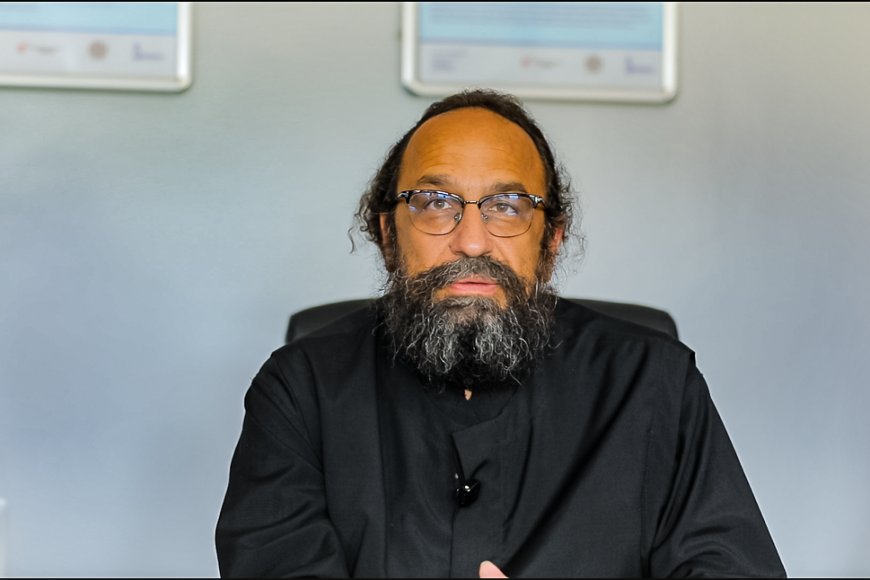
Rev. Alexandros Lordos, Ass. Prof. of Clinical Psychology at the University of Cyprus, has praised Rwanda's community-centred approach to rehabilitating and reintegrating inmates, describing it as a model from which other post-conflict societies can learn.
Speaking to The Peace Today, Rev. Prof. Lordos said Rwanda's experience demonstrates that successful reintegration extends far beyond preparing inmates for release. Instead, it requires a deliberate effort to rebuild trust, repair fractured relationships and strengthen the communities to which former inmates return.
"What makes Rwanda stand out is its commitment to reconciliation," he said, noting that the country has adopted a rehabilitation model that is not only restorative but also deeply reconciliatory.
Rev. Prof. Lordos has played an active role in supporting Rwanda's efforts to strengthen the rehabilitation and reintegration of inmates, working through partners such as Interpeace and collaborating closely with Rwandan experts to develop tools, approaches and training materials that advance these efforts.
According to Rev. Prof. Lordos, Rwanda has invested considerable effort in encouraging people convicted of crimes to acknowledge responsibility for their actions, express genuine remorse and seek forgiveness from those they harmed. At the same time, victims who choose to forgive are supported in making that decision freely, without coercion.
He believes this balance is one of Rwanda's greatest strengths because reintegration is approached as a shared community responsibility rather than solely the responsibility of the individual leaving prison.
"It is not only about someone stopping criminal behaviour," he explained. "It is about healing the wounds inflicted on families and communities and creating the conditions for that person to become a constructive member of society once again."
Rev. Prof. Lordos said this community-centred philosophy aligns closely with growing international evidence on crime prevention and rehabilitation.
Research from leading institutions, including the University of Cambridge, increasingly points to the role of community cohesion and resilience in reducing crime and supporting long-term recovery.
"In many ways, Rwanda has been putting these principles into practice for years," he said.
"Its experience demonstrates that successful reintegration is not achieved by working with former inmates alone. It requires the active involvement of families, communities and institutions, all working together to create an environment where lasting change is possible," he added.
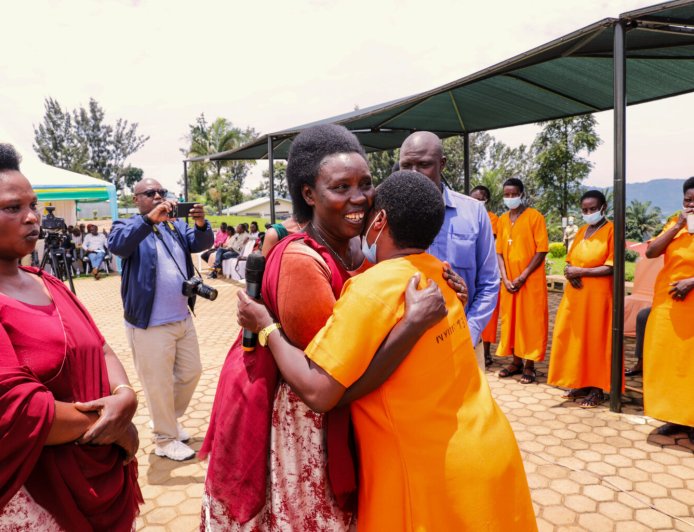
Inmates nearing their release reconnect with their families and seek forgiveness from the families they offended before returning to their communities in Nyamasheke District, Rwanda. Photo: Interpeace
He highlighted that Rwanda's experience offers valuable lessons for countries emerging from conflict, where rebuilding social trust is often as important as rebuilding institutions.
"I believe Rwanda has a great deal to teach the world through its community-based approach to rehabilitation, reconciliation and reintegration," he said.
While acknowledging that rehabilitation and reintegration remain difficult challenges worldwide, Rev. Prof. Lordos said Rwanda has made remarkable progress in strengthening rehabilitation programmes within its correctional facilities.
He also singled out the establishment of the Social Reintegration Centre, commonly referred to as a halfway house, as a significant innovation that places Rwanda among global leaders in supporting inmates as they transition back into society.
"My assessment is that Rwanda has made significant progress in improving the quality of rehabilitation programmes within its correctional facilities," he said.
"Its recent initiative to establish halfway houses through the Social Reintegration Centre is an important innovation that places the country at the forefront of global efforts to support successful reintegration," Rev. Prof. Lordos praised.
Bridging the gap through a family-based approach
However, Rev. Prof. Lordos noted that there is still room to strengthen the country's reintegration framework by ensuring clearer coordination after inmates are released.
"If there is one area where further progress can be made, it is in clearly defining who assumes responsibility for supporting former inmates after they return to their communities, who follows up with them and how that support is coordinated," he said.
He stressed that reintegration is a complex, long-term process involving far more than release from prison. It includes restoring family relationships, rebuilding livelihoods, promoting reconciliation within communities and encouraging active civic participation.
These interconnected aspects, he said, require coordinated support and continuous monitoring to reduce the risk of reoffending and ensure former inmates successfully rebuild their lives.
Rev. Prof. Lordos said this is precisely where the Family-Based Pathways to Inmate Reintegration (FBPR) approach becomes particularly important, as it bridges rehabilitation inside correctional facilities with sustained support after inmates return to their communities.
"One of the strengths of a Family-Based Pathways to Inmate Reintegration is that it strengthens continuity of care by connecting what happens inside correctional facilities with what happens after release," he said.
"It ensures that reintegration is not viewed as a single event but as a process that continues within families and communities," Rev. Prof. Lordos added.