 English
 Kinyarwanda

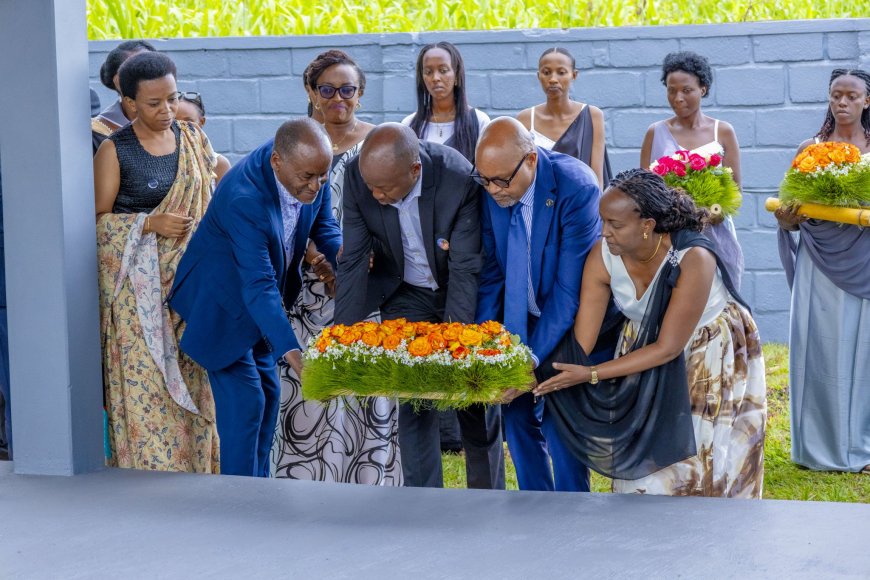
Five victims buried during 32nd commemoration at Gahanga Genocide Memorial
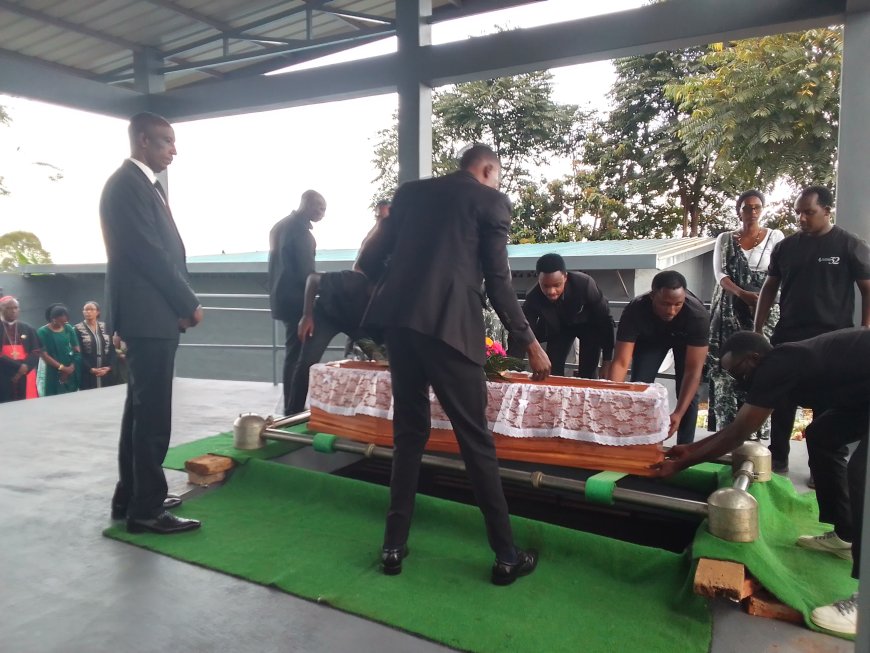
Five newly discovered bodies of victims of the 1994 Genocide against the Tutsi were laid to rest at the Gahanga Genocide Memorial on April 10, bringing the total number of victims honored at the site to 16,968.
The burial took place during the 32nd commemoration ceremony, where government officials, survivors, and residents gathered to honor the victims and reflect on Rwanda’s journey of recovery and resilience.
Dr. Sabin Nsanzimana, the Minister of Health, emphasised that honouring the victims is a national duty.
“This programme of remembrance is not just a routine event, he said. “It is a responsibility for all of us as Rwandans.”
“This is why, amidst our many daily work schedules, we must give this a great value and participate so that these young children, here present today, will also carry it forward,” he added, noting that, “if you do not remember, there are no lessons to be learned, and you cannot protect what you do not know.
Kabandana Felix, the President of IBUKA in Kicukiro District, stated that the 100 days of remembrance serve to restore the dignity of those killed.
“Remembrance is a time for those who lost their loved ones to 'reunite' with them, reflecting on their good virtues and making those values their own so they are never erased. It is also a way to restore the value and dignity that was stripped from them when they were brutally murdered,” Kabandana said.
He expressed gratitude to the Rwanda Patriotic Army (RPA) for stopping the killings, noting: “A moment like this, is for expressing our gratitude because, without the Inkotanyi, I am not sure there would be anyone left to tell the story.”
Kabandana further thanked First Lady Jeannette Kagame for her closeness to the survivors and the IBUKA family, recalling her message: “Remembrance is a word of heavy responsibility; we must continue to remember our people because a society that does not remember perishes.”
Survivors at the ceremony shared testimonies of the 1994 atrocities and their path to recovery.
Bandora Augustin, one survivors, described the moment the local resistance was overwhelmed by armed soldiers.
“We fled to this place thinking that if we took refuge in a priest's church, we would be safe,” he said. “We fought back. All the men armed themselves with stones to protect the women and children. We tried to fight killers with stones, but we were defeated," Bandora recalled the scenes of horror at the church. He added that those who were young jumped the fence and managed to escape.
“We survived, and the government gathered us back together. They reunited us and even brought us together with those who committed crimes against us. They taught us all as one and reconciled us.”
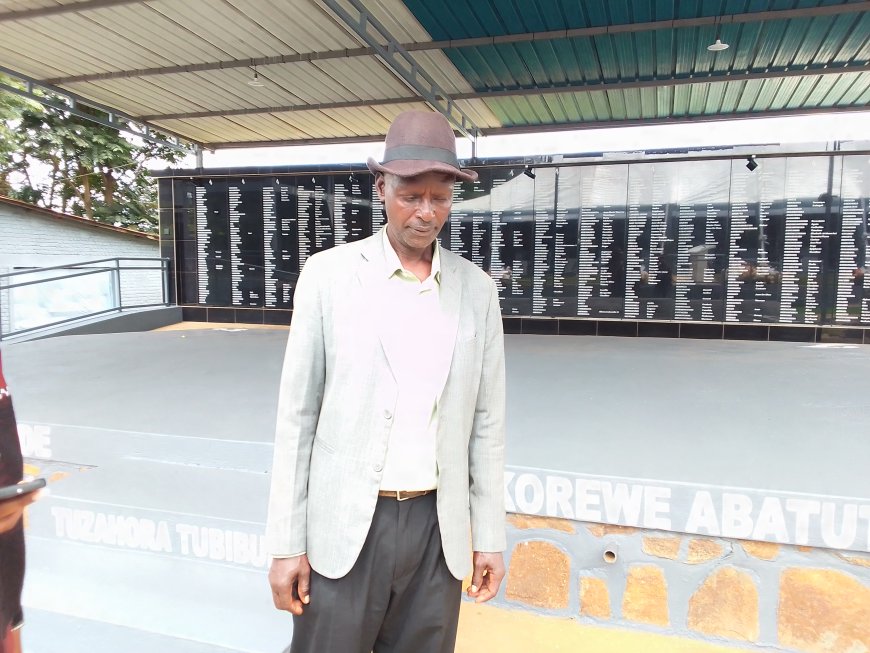
Mukayiranga Grace, who was only nine years old when the Genocide began, thanked the RPA and the government for her education and housing after the genocide.
“We are so grateful to those who played a role in saving us,” she praised. “It was not easy at all.”
“I especially thank the women who played a part in stopping the genocide. It was difficult, and without them, we wouldn't be here. Today, we are alive and doing well. We were blessed that the they paid for our education and built houses for us,” Mukayiranga added.
She explained that they have successfully rebuilt their lives. She expressed deep gratitude toward the FPR Inkotanyi for taking the necessary actions to save them, noting that they were their only source of protection during that time.