
Fleeing War, Facing Hardship: Thousands of Congolese Refugees Struggle to Survive in Burundi Camp
Photo: ICRC

Fleeing War, Facing Hardship: Thousands of Congolese Refugees Struggle to Survive in Burundi Camp

Mar 17, 2026 - 12:53
 0

Tens of thousands of people fleeing renewed violence in eastern Democratic Republic of the Congo have crossed into neighboring Burundi, where they now face harsh and overcrowded conditions in a rapidly expanding refugee camp. Aid agencies warn that the situation in Busuma camp is becoming increasingly dire, with families lacking even


the most basic necessities as humanitarian needs continue to outpace available support.

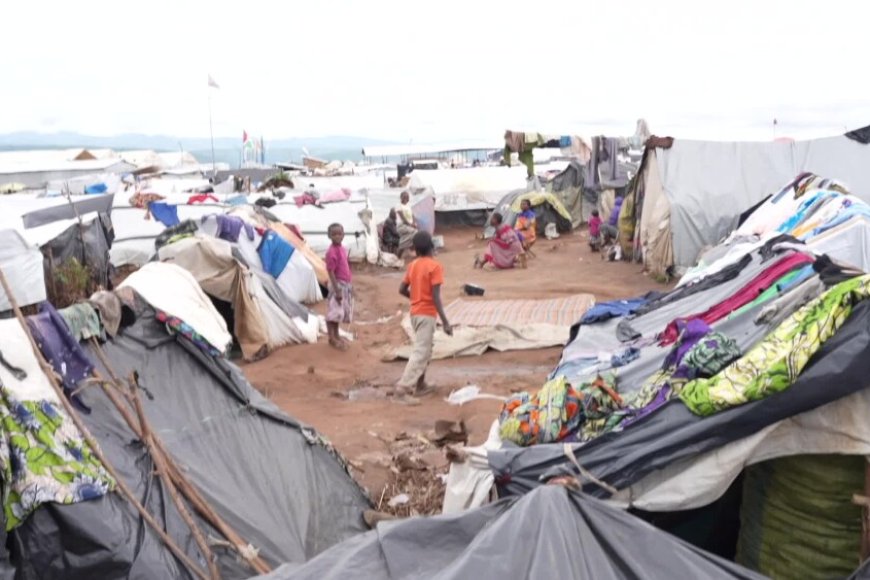
Hidden among forested hills in northern Burundi, the camp has swollen to host more than 65,000 people since December 2025. What was once a remote area is now filled with rows of makeshift shelters, thin plastic sheets stretched over fragile frames, offering little protection from rain, heat, or cold. For many, survival has become a daily struggle.

Among them is Esperance Sakina Hatari, who fled her village in South Kivu with her children, leaving everything behind. Like countless others, she arrived with nothing and now tries to earn a small income making charcoal near the camp’s entrance. Her story reflects a broader crisis of families torn apart, children exposed to the elements, and a growing sense of uncertainty about the fate of loved ones left behind.

“We sleep on the ground,” she said. “The children are dying of cold and hunger. My husband and I were separated. Many families have been separated.”

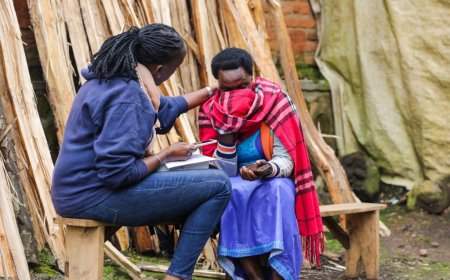
The International Committee of the Red Cross (ICRC), alongside the Burundi Red Cross, is working to restore family links and provide critical assistance. Teams on the ground are helping refugees reconnect with relatives through phone calls and internet access, offering a rare lifeline for those desperate for news of missing family members.

For aid workers like Noemie Niyongere, the scale of need is overwhelming. Many families still lack shelter, leaving them exposed to the elements. When heavy rains fall, water seeps through plastic coverings, forcing people to scramble to protect what little they have.

“People suffer a lot when it rains or when there’s too much sun,” she said. “The assistance they receive is far less than what they need.”

Access to clean water and sanitation remains another urgent concern. Despite ongoing efforts to expand water supply and build latrines, many refugees must walk long distances outside the camp to collect water, increasing risks to their safety and health.

For Anastasie Cubwa, displacement is not new. After spending seven years in another refugee camp, she had returned home, hoping for a fresh start, only to be forced to flee again as violence escalated.

“We heard bombs getting closer,” she recalled. “One killed people. Another landed behind our houses. I took my children and ran.”

Her experience mirrors that of many in Busuma, where repeated displacement has become a painful reality.

The ICRC warns that as global crises multiply, emergencies like this risk being overlooked, with funding falling short of growing humanitarian needs. Yet despite limited resources, aid organizations continue to provide essential support, from reconnecting families to distributing basic supplies and improving access to water.

For the thousands sheltering in Busuma, however, the path forward remains uncertain—defined by loss, resilience, and the hope of one day returning home.
 

Fleeing War, Facing Hardship: Thousands of Congolese Refugees Struggle to Survive in Burundi Camp

Mar 17, 2026 - 12:53
 0
Fleeing War, Facing Hardship: Thousands of Congolese Refugees Struggle to Survive in Burundi Camp
Photo: ICRC

Tens of thousands of people fleeing renewed violence in eastern Democratic Republic of the Congo have crossed into neighboring Burundi, where they now face harsh and overcrowded conditions in a rapidly expanding refugee camp. Aid agencies warn that the situation in Busuma camp is becoming increasingly dire, with families lacking even


the most basic necessities as humanitarian needs continue to outpace available support.

Hidden among forested hills in northern Burundi, the camp has swollen to host more than 65,000 people since December 2025. What was once a remote area is now filled with rows of makeshift shelters, thin plastic sheets stretched over fragile frames, offering little protection from rain, heat, or cold. For many, survival has become a daily struggle.

Among them is Esperance Sakina Hatari, who fled her village in South Kivu with her children, leaving everything behind. Like countless others, she arrived with nothing and now tries to earn a small income making charcoal near the camp’s entrance. Her story reflects a broader crisis of families torn apart, children exposed to the elements, and a growing sense of uncertainty about the fate of loved ones left behind.

“We sleep on the ground,” she said. “The children are dying of cold and hunger. My husband and I were separated. Many families have been separated.”

The International Committee of the Red Cross (ICRC), alongside the Burundi Red Cross, is working to restore family links and provide critical assistance. Teams on the ground are helping refugees reconnect with relatives through phone calls and internet access, offering a rare lifeline for those desperate for news of missing family members.

For aid workers like Noemie Niyongere, the scale of need is overwhelming. Many families still lack shelter, leaving them exposed to the elements. When heavy rains fall, water seeps through plastic coverings, forcing people to scramble to protect what little they have.

“People suffer a lot when it rains or when there’s too much sun,” she said. “The assistance they receive is far less than what they need.”

Access to clean water and sanitation remains another urgent concern. Despite ongoing efforts to expand water supply and build latrines, many refugees must walk long distances outside the camp to collect water, increasing risks to their safety and health.

For Anastasie Cubwa, displacement is not new. After spending seven years in another refugee camp, she had returned home, hoping for a fresh start, only to be forced to flee again as violence escalated.

“We heard bombs getting closer,” she recalled. “One killed people. Another landed behind our houses. I took my children and ran.”

Her experience mirrors that of many in Busuma, where repeated displacement has become a painful reality.

The ICRC warns that as global crises multiply, emergencies like this risk being overlooked, with funding falling short of growing humanitarian needs. Yet despite limited resources, aid organizations continue to provide essential support, from reconnecting families to distributing basic supplies and improving access to water.

For the thousands sheltering in Busuma, however, the path forward remains uncertain—defined by loss, resilience, and the hope of one day returning home.