 English
 Kinyarwanda

Rwanda : Former rebels confront reality of Genocide against the Tutsi after decades of misinformation

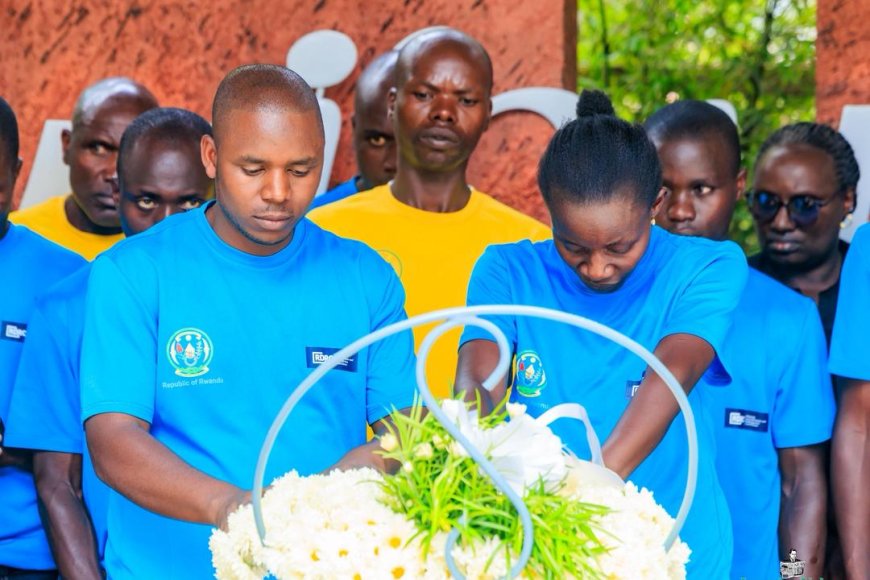
For the first time in the history of Rwanda’s reintegration programme, a cohort of 250 former combatants from the FDLR and other armed groups based in the Democratic Republic of Congo (DRC) has visited the Kigali Genocide Memorial and the Campaign Against Genocide Museum.
For the first time in the history of Rwanda’s reintegration program, a cohort of from the FDLR and other armed groups based in the Democratic Republic of Congo (DRC) has visited the Kigali Genocide Memorial and the Campaign Against Genocide Museum.
The 250 ex-combatants arepart of the 76th intake, which consists of individuals who have spent the last three months at the Mutobo Demobilization Centre, going through a demobilisation process before they return back to their families and communities.
Even though the Rwanda Demobilisation and Reintegration Commission (RDRC) has successfully processed over 13,000 former rebels across 75 previous cycles since 2001, this specific visit marks a significant shift in the rehabilitation process, targeting the deep-seated indoctrination of those raised in the forests of the DRC.
The majority of this group are young men and women born and raised in the jungles of eastern Congo, the children of original FDLR fighters. They grew up immersed in a culture of ethnic hatred and genocide denial, where the history of the 1994 Genocide against the Tutsi was systematically erased or distorted by their commanders.
Jean De Dieu Maniraguha, a former Second Lieutenant speaking on behalf of the group, shared a reflection on his past.
“Most of us were born after 1994. I was only nine months old when the Genocide happened. To be honest, I didn’t know this history. Our leaders in the FDLR told us a completely different story. They never even used the word ‘Genocide.’ They claimed it was just a conflict where people killed each other, specifically alleging that Tutsis killed Hutus.”
After touring the memorial and seeing the evidence firsthand, Maniraguha noted the impact of the experience.
“We are relieved to finally know the truth. We saw that what they told us happened didn’t, and what they told us never happened actually did. We have seen that the Genocide against the Tutsi was a reality carried out with unimaginable cruelty.”
Weaponisation of faith
The FDLR, formed in 2000 to succeed the blacklisted ALIR group, relied heavily on a pillar often overlooked: religious manipulation. According to those who have defected, religion was used as a tool of control rather than faith.
Commanders used “prophecies” to justify violence and prevent soldiers from returning home, telling them they were fighting a “holy war” and promising them land and houses in Rwanda through divine intervention once they “conquered” the country.
For the men at Mutobo, the visit to the memorial served as the final confirmation that these promises were fabrications. And they decide to be the witnesses to the truth as they were lied for a long time.
Milestone for national unity
The visit comes just weeks before Rwanda begins its 32nd commemoration of the 1994 Genocide against Tutsi.
For these former combatants, it will be the first time they join their fellow citizens in mourning.
Valerie Nyirahabineza, Chairperson of the RDRC, urged the group to become ambassadors of this new reality.
“Now that you have seen the reality, carry this message to everyone. Encourage those still in the forests to come home,” Nyirahabineza said.
Since 2001, former FDLR members have transitioned into all sectors of Rwandan society—some joining the Rwanda Defence Force (RDF), while others have become farmers, teachers, lawyers, and entrepreneurs.