
UR Honours 563 Genocide Victims as Vice Chancellor Denounces Divisive Ideology

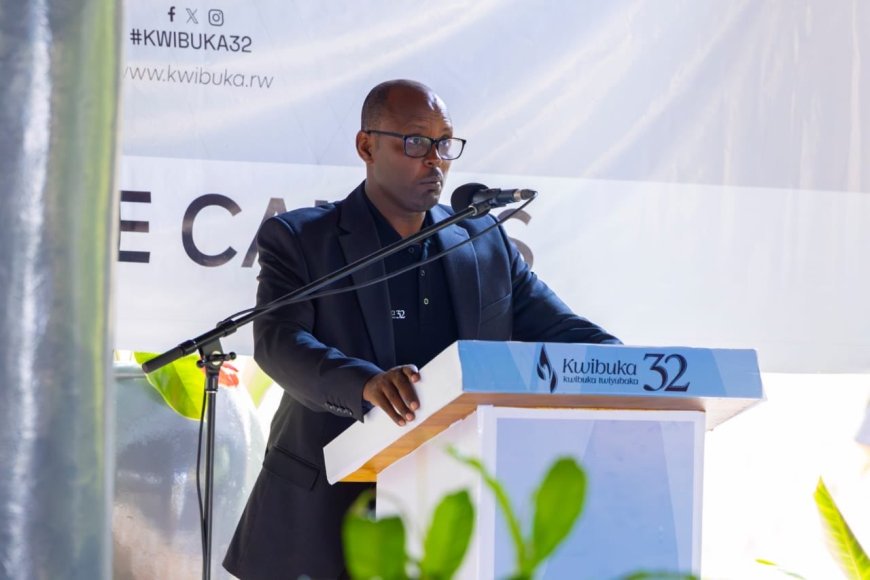
The Vice Chancellor of the University of Rwanda, Prof. Kayihura M. Didas, delivers his remarks during the 32nd commemoration of the 1994 Genocide against the Tutsi at the UR Huye Campus memorial site on April 22, 2026.

UR Honours 563 Genocide Victims as Vice Chancellor Denounces Divisive Ideology

Apr 22, 2026 - 15:11
 0

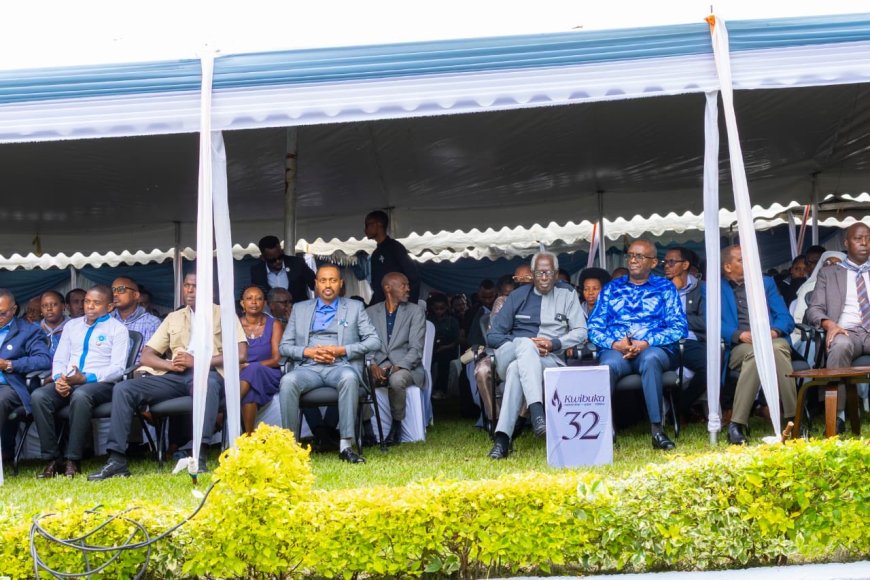
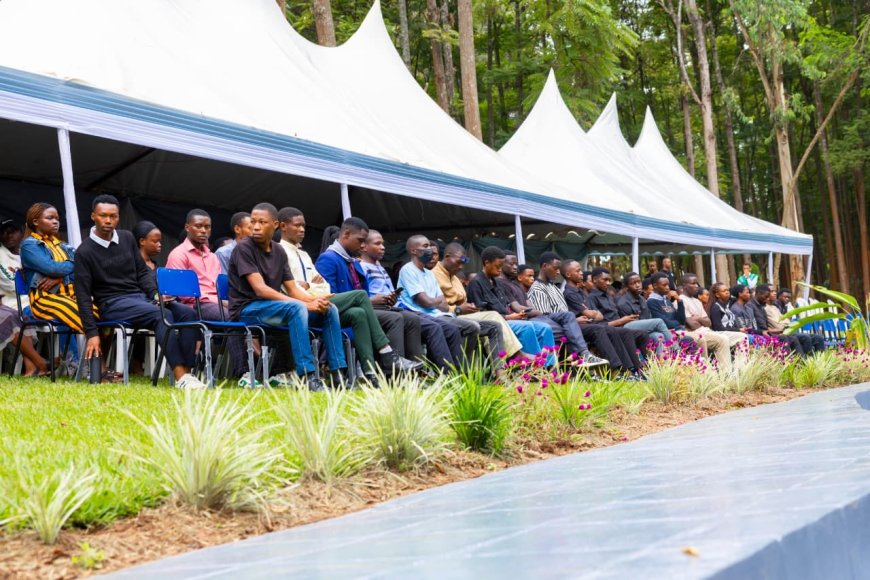
The University of Rwanda (UR) community gathered at the Huye Campus Genocide Memorial site on Wednesday, April 22, to honour 563 victims of the 1994 Genocide against the Tutsi during the 32nd commemoration event.


The Vice Chancellor of UR, Prof. Kayihura M. Didas, led the ceremony following a “Walk to Remember,” where he paid tribute to the students, staff, and faculty members killed in 1994. 

The memorial site serves as a final resting place for 563 victims of the former National University of Rwanda, where 429 have been identified by name.

The Vice Chancellor emphasised that those interred at the site serve as a solemn reminder of the university’s responsibility to confront the ideology of division.

“Students, lecturers, and staff who were killed and laid to rest here remain a lasting source of strength for our country in the fight against the ideology of division that led to the Genocide,” he stated.

Reflecting on the history of the region, Kayihura noted that while the Genocide took longer to reach Butare Prefecture, it was eventually incited by top leaders of the genocidal government.

He contrasted the manipulation of youth in 1994 with the values being instilled in students today under the current national leadership.

“As educators of Rwanda’s largely young population, we reflect on the fact that many young people in 1994 were drawn into the killings as Interahamwe, manipulated by leaders and politicians who planned and directed the Genocide,” Kayihura remarked.

He added that today’s youth are instead guided toward unity and national cohesion, noting that the “final solution” intended by the genocidal forces failed.

“The proof lies in the survivors among us today and many others across Rwanda whose lives stand as testimony to resilience,” he said.

He also reaffirmed the role of university in nation-building and its commitment to ensuring that such a tragedy never happens again.

“As the leadership of the University of Rwanda, we reaffirm our dedication to educating the nation along this path and to shaping a generation that reflects the Rwanda we aspire to build,” the Vice Chancellor noted.
UR Honours 563 Genocide Victims as Vice Chancellor Denounces Divisive Ideology

Apr 22, 2026 - 15:11
Apr 22, 2026 - 15:48
 0
UR Honours 563 Genocide Victims as Vice Chancellor Denounces Divisive Ideology
The Vice Chancellor of the University of Rwanda, Prof. Kayihura M. Didas, delivers his remarks during the 32nd commemoration of the 1994 Genocide against the Tutsi at the UR Huye Campus memorial site on April 22, 2026.

The University of Rwanda (UR) community gathered at the Huye Campus Genocide Memorial site on Wednesday, April 22, to honour 563 victims of the 1994 Genocide against the Tutsi during the 32nd commemoration event.


The Vice Chancellor of UR, Prof. Kayihura M. Didas, led the ceremony following a “Walk to Remember,” where he paid tribute to the students, staff, and faculty members killed in 1994. 

The memorial site serves as a final resting place for 563 victims of the former National University of Rwanda, where 429 have been identified by name.

The Vice Chancellor emphasised that those interred at the site serve as a solemn reminder of the university’s responsibility to confront the ideology of division.

“Students, lecturers, and staff who were killed and laid to rest here remain a lasting source of strength for our country in the fight against the ideology of division that led to the Genocide,” he stated.

Reflecting on the history of the region, Kayihura noted that while the Genocide took longer to reach Butare Prefecture, it was eventually incited by top leaders of the genocidal government.

He contrasted the manipulation of youth in 1994 with the values being instilled in students today under the current national leadership.

“As educators of Rwanda’s largely young population, we reflect on the fact that many young people in 1994 were drawn into the killings as Interahamwe, manipulated by leaders and politicians who planned and directed the Genocide,” Kayihura remarked.

He added that today’s youth are instead guided toward unity and national cohesion, noting that the “final solution” intended by the genocidal forces failed.

“The proof lies in the survivors among us today and many others across Rwanda whose lives stand as testimony to resilience,” he said.

He also reaffirmed the role of university in nation-building and its commitment to ensuring that such a tragedy never happens again.

“As the leadership of the University of Rwanda, we reaffirm our dedication to educating the nation along this path and to shaping a generation that reflects the Rwanda we aspire to build,” the Vice Chancellor noted.