
IGAD Warns Against ‘Commercialisation of Peace’ as Regional Tensions Rise

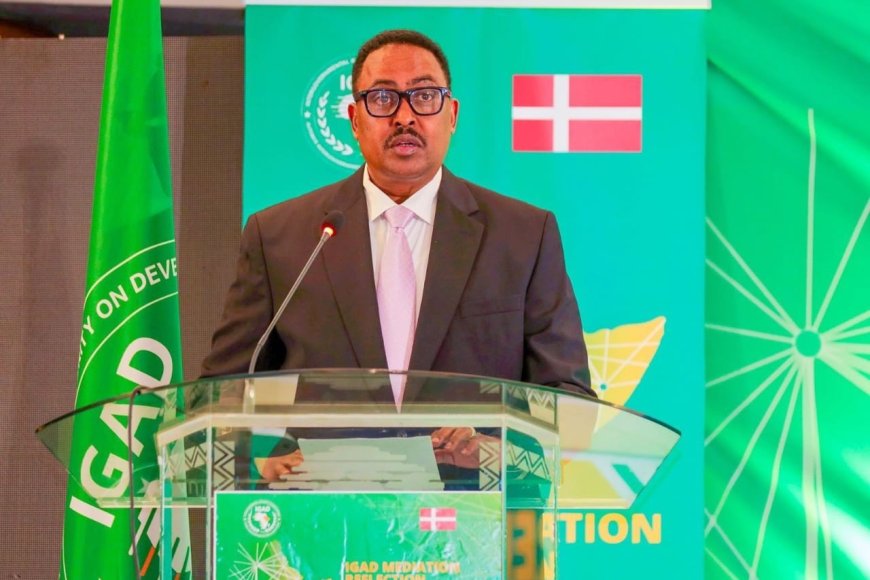
Dr. Workneh Gebeyehu, the Executive Secretary of IGAD, addresses delegates at the mediation reflection conference in Nairobi on April 28, 2026.

IGAD Warns Against ‘Commercialisation of Peace’ as Regional Tensions Rise

Apr 30, 2026 - 11:29
 0

Regional leaders and diplomatic experts issued a stark warning Tuesday 27, April that the global mediation landscape is shifting toward a dangerous transactional model where peace is being “privatised” and national sovereignty is under threat.


Speaking at the Inter-Governmental Authority on Development (IGAD) conference in Nairobi, Kenya’s Prime Cabinet Secretary Musalia Mudavadi warned that the “commercialisation” of peace has exposed the humanity from conflict resolution.

“Peace has been privatised. Perhaps even commercialised,” Mudavadi told the assembly of seasoned mediators and researchers. “Because it is about transactions. It is no longer humanity. It is no longer about lives.”

The conference, titled ‘Reimagining Mediation in a Fragmented World,’ comes as the Horn of Africa faces what IGAD Executive Secretary Dr. Workneh Gebeyehu described as a critical “emergency of a system of conflict.”

Mudavadi raised the alarm over a “new definition of sovereignty,” suggesting that mediation is moving away from genuine peace toward business-like deals.

“We are now seeing in conversations discussions that talk of possible acquisition of nations or part of nations, a completely new dynamic is taking place,” Mudavadi said.

He challenged mediators to examine their motives, asking: “When you go to mediation, are you going there as a business negotiator? Are you going there as an arbitrator of transactions? or are you going there genuinely as mediator to see peace in the countries facing conflict?”

Dr. Gebeyehu underscored a growing tension between “principled mediation” and “transactional deal making.”

He defined the “central dilemma of our time” as: “How do we end the violence quickly without undermining sustainable peace?”

While experts acknowledged that ending active fighting is a necessary first step, they warned that a narrow focus on truces often fails.

Martin Griffith, Former UN Undersecretary General for Humanitarian Affairs, pointed out that a ceasefire alone cannot deliver lasting stability.

IGAD’s chief echoed this sentiment, stating that mediation “risks becoming a crisis management rather than a conflict resolution (instrument).”

The dangers of this transactional approach are most visible in active conflicts like Sudan. Ambassador Mohamed Belaiche, representing the AU Commission, emphasized that the principles of unity and territorial integrity must remain “legal and moral safeguards.”

“Any serious political process must begin with a clear rejection of any violation upon the unity of Sudan,” Belaiche insisted.

Solomon Dersso, Founding Director of Amani Africa, noted that the trend of “acquisition of nations” is particularly terrifying for the continent.

He noted that Africa’s “bitter experience” with such acquisitions in the past should remove any sense of complacency in fending off the dangers of transactionalism.

The two-day conference, concluding April 28, marks the 40th anniversary of IGAD.

IGAD Warns Against ‘Commercialisation of Peace’ as Regional Tensions Rise

Apr 30, 2026 - 11:29
Apr 30, 2026 - 13:59
 0
IGAD Warns Against ‘Commercialisation of Peace’ as Regional Tensions Rise
Dr. Workneh Gebeyehu, the Executive Secretary of IGAD, addresses delegates at the mediation reflection conference in Nairobi on April 28, 2026.

Regional leaders and diplomatic experts issued a stark warning Tuesday 27, April that the global mediation landscape is shifting toward a dangerous transactional model where peace is being “privatised” and national sovereignty is under threat.


Speaking at the Inter-Governmental Authority on Development (IGAD) conference in Nairobi, Kenya’s Prime Cabinet Secretary Musalia Mudavadi warned that the “commercialisation” of peace has exposed the humanity from conflict resolution.

“Peace has been privatised. Perhaps even commercialised,” Mudavadi told the assembly of seasoned mediators and researchers. “Because it is about transactions. It is no longer humanity. It is no longer about lives.”

The conference, titled ‘Reimagining Mediation in a Fragmented World,’ comes as the Horn of Africa faces what IGAD Executive Secretary Dr. Workneh Gebeyehu described as a critical “emergency of a system of conflict.”

Mudavadi raised the alarm over a “new definition of sovereignty,” suggesting that mediation is moving away from genuine peace toward business-like deals.

“We are now seeing in conversations discussions that talk of possible acquisition of nations or part of nations, a completely new dynamic is taking place,” Mudavadi said.

He challenged mediators to examine their motives, asking: “When you go to mediation, are you going there as a business negotiator? Are you going there as an arbitrator of transactions? or are you going there genuinely as mediator to see peace in the countries facing conflict?”

Dr. Gebeyehu underscored a growing tension between “principled mediation” and “transactional deal making.”

He defined the “central dilemma of our time” as: “How do we end the violence quickly without undermining sustainable peace?”

While experts acknowledged that ending active fighting is a necessary first step, they warned that a narrow focus on truces often fails.

Martin Griffith, Former UN Undersecretary General for Humanitarian Affairs, pointed out that a ceasefire alone cannot deliver lasting stability.

IGAD’s chief echoed this sentiment, stating that mediation “risks becoming a crisis management rather than a conflict resolution (instrument).”

The dangers of this transactional approach are most visible in active conflicts like Sudan. Ambassador Mohamed Belaiche, representing the AU Commission, emphasized that the principles of unity and territorial integrity must remain “legal and moral safeguards.”

“Any serious political process must begin with a clear rejection of any violation upon the unity of Sudan,” Belaiche insisted.

Solomon Dersso, Founding Director of Amani Africa, noted that the trend of “acquisition of nations” is particularly terrifying for the continent.

He noted that Africa’s “bitter experience” with such acquisitions in the past should remove any sense of complacency in fending off the dangers of transactionalism.

The two-day conference, concluding April 28, marks the 40th anniversary of IGAD.