
Iran denies US talks, pushes Hormuz shipping deal

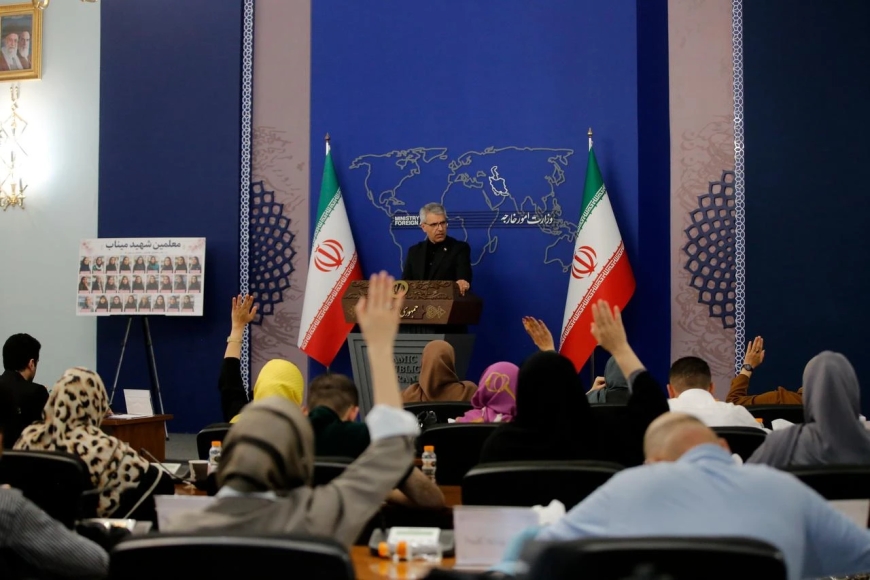
Iranian Foreign Ministry spokesperson Esmail Baghaei speaks during a press conference at the Foreign Ministry in Tehran, Iran, May 4, 2026. Photo: AA

Iran denies US talks, pushes Hormuz shipping deal

Aug 3, 2026 - 13:44
 0

Iran said Monday, August 3, it is not holding talks with the United States, rejecting reports of new negotiations while confirming ongoing discussions with Oman on a temporary shipping corridor through the Strait of Hormuz.


Speaking at a news briefing, Foreign Ministry spokesperson Esmaeil Baghaei said Tehran's immediate diplomatic focus is on securing a safe navigation route with Oman rather than engaging in direct discussions with Washington.

The talks come amid continued regional tensions and global concerns over shipping through one of the world's most important oil transit routes.

Asked about reports that Qatari and Pakistani representatives had arrived to begin Iran-U.S. negotiations, Baghaei rejected the claims.

"In these days, we are neither going to host a delegation from outside, nor are we going to be a guest anywhere."

He said Iran's foreign minister remains in contact with regional and international counterparts in an effort to prevent further insecurity and protect the country's national interests and security.

Baghaei confirmed that negotiations with Oman have been "pursued seriously" over the past seven to eight days. He said the discussions are focused on creating a temporary shipping corridor that balances the interests of both Iran and Oman.

"We are creating a temporary corridor in the Strait of Hormuz, not two or three separate routes. The proposed Hormuz route must meet the interests and considerations of both coastal states. The U.S. effort to open the southern route of Hormuz conflicted with the provisions of the understanding," Baghaei said.

He explained that negotiators are working on a single intermediate route combining the current southern passage through Omani waters and the northern passage through Iranian territorial waters.

"During this period, the negotiations have been centered around the idea that the southern route, i.e., the route that passes through Omani waters, and the northern route that passes through Iranian territorial waters, should become an intermediate route; a route that meets the considerations and interests of both coastal states. Therefore, now we are talking about a corridor that will have a return route, not two or three separate routes. This intermediate route is intended to be used temporarily until a decision is made on a fixed route to replace what is known in international shipping literature as the 'TSS'," he added.

Baghaei also dismissed suggestions that China has become a formal mediator between Tehran and Washington over the Strait of Hormuz. He said Pakistan remains the mediator on Iran-U.S. matters, while Qatar provides assistance when needed.

He acknowledged China's close ties with Iran, saying Beijing shares Tehran's concerns over what he described as U.S. unilateralism and regional instability. Chinese officials, he said, are helping to prevent further escalation but are not part of the formal mediation process.

Baghaei said it remains too early to determine whether the Oman negotiations could help ease wider regional tensions.

"We will have to wait a while to see whether the negotiations with Oman can be connected to another process and lead to a reduction in tension in the region," Baghaei said.

He stressed that the current negotiations are limited to ensuring safe maritime navigation between Iran and Oman.

"These negotiations are for an understanding on a safe shipping route between Iran and Oman. We will have to wait a while to see whether this stage and this process can be connected to another process that leads to a reduction in tension in the region."

Baghaei added that details of the proposed memorandum remain under negotiation but said any final agreement would safeguard the sovereignty, national security, national interests and maritime rights of both countries.

"Since the content of this memorandum is still under negotiation, let me confine myself to the same explanations I gave. As a rule, in any understanding regarding shipping traffic between two coastal states, all issues related to the sovereignty and sovereign rights of the two countries, as well as issues of national security, national interests, and issues related to maritime services, are definitely considered and examined."

Iran denies US talks, pushes Hormuz shipping deal

Aug 3, 2026 - 13:44
Aug 3, 2026 - 13:44
 0
Iran denies US talks, pushes Hormuz shipping deal
Iranian Foreign Ministry spokesperson Esmail Baghaei speaks during a press conference at the Foreign Ministry in Tehran, Iran, May 4, 2026. Photo: AA

Iran said Monday, August 3, it is not holding talks with the United States, rejecting reports of new negotiations while confirming ongoing discussions with Oman on a temporary shipping corridor through the Strait of Hormuz.


Speaking at a news briefing, Foreign Ministry spokesperson Esmaeil Baghaei said Tehran's immediate diplomatic focus is on securing a safe navigation route with Oman rather than engaging in direct discussions with Washington.

The talks come amid continued regional tensions and global concerns over shipping through one of the world's most important oil transit routes.

Asked about reports that Qatari and Pakistani representatives had arrived to begin Iran-U.S. negotiations, Baghaei rejected the claims.

"In these days, we are neither going to host a delegation from outside, nor are we going to be a guest anywhere."

He said Iran's foreign minister remains in contact with regional and international counterparts in an effort to prevent further insecurity and protect the country's national interests and security.

Baghaei confirmed that negotiations with Oman have been "pursued seriously" over the past seven to eight days. He said the discussions are focused on creating a temporary shipping corridor that balances the interests of both Iran and Oman.

"We are creating a temporary corridor in the Strait of Hormuz, not two or three separate routes. The proposed Hormuz route must meet the interests and considerations of both coastal states. The U.S. effort to open the southern route of Hormuz conflicted with the provisions of the understanding," Baghaei said.

He explained that negotiators are working on a single intermediate route combining the current southern passage through Omani waters and the northern passage through Iranian territorial waters.

"During this period, the negotiations have been centered around the idea that the southern route, i.e., the route that passes through Omani waters, and the northern route that passes through Iranian territorial waters, should become an intermediate route; a route that meets the considerations and interests of both coastal states. Therefore, now we are talking about a corridor that will have a return route, not two or three separate routes. This intermediate route is intended to be used temporarily until a decision is made on a fixed route to replace what is known in international shipping literature as the 'TSS'," he added.

Baghaei also dismissed suggestions that China has become a formal mediator between Tehran and Washington over the Strait of Hormuz. He said Pakistan remains the mediator on Iran-U.S. matters, while Qatar provides assistance when needed.

He acknowledged China's close ties with Iran, saying Beijing shares Tehran's concerns over what he described as U.S. unilateralism and regional instability. Chinese officials, he said, are helping to prevent further escalation but are not part of the formal mediation process.

Baghaei said it remains too early to determine whether the Oman negotiations could help ease wider regional tensions.

"We will have to wait a while to see whether the negotiations with Oman can be connected to another process and lead to a reduction in tension in the region," Baghaei said.

He stressed that the current negotiations are limited to ensuring safe maritime navigation between Iran and Oman.

"These negotiations are for an understanding on a safe shipping route between Iran and Oman. We will have to wait a while to see whether this stage and this process can be connected to another process that leads to a reduction in tension in the region."

Baghaei added that details of the proposed memorandum remain under negotiation but said any final agreement would safeguard the sovereignty, national security, national interests and maritime rights of both countries.

"Since the content of this memorandum is still under negotiation, let me confine myself to the same explanations I gave. As a rule, in any understanding regarding shipping traffic between two coastal states, all issues related to the sovereignty and sovereign rights of the two countries, as well as issues of national security, national interests, and issues related to maritime services, are definitely considered and examined."