 English
 Kinyarwanda

Kagame: History Revisionism Threatens National Security, Distorters 'Will Pay the Price'
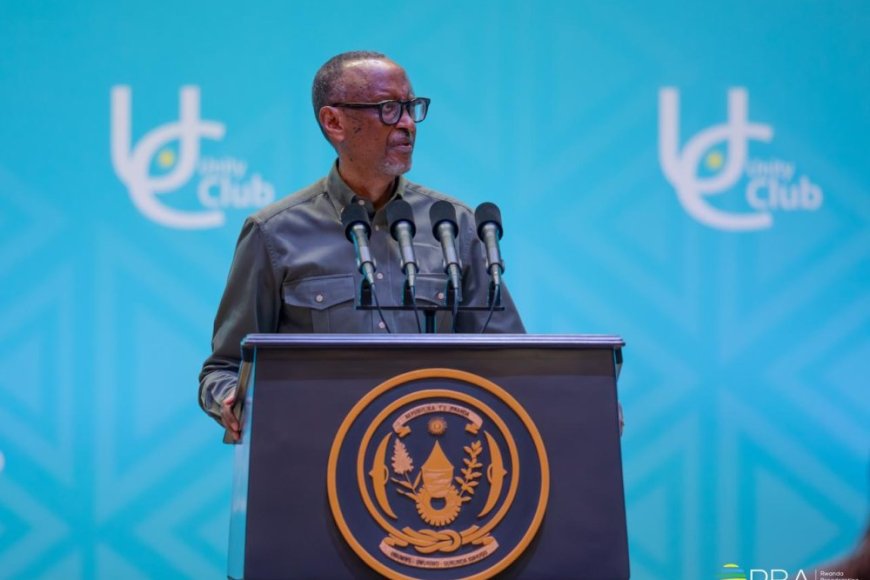
President Paul Kagame on Saturday June 27 warned that historical revisionism directly threatens national security, declaring that individuals who distort the country's past will pay the price.
“When you see things reaching a point where they take on a form that could return people to the bad history we know, 'No'! You draw a clear line. Whoever crosses it will pay the price. We will not hesitate on that at all,” President Paul Kagame speaking at a consultative forum at the Intare Arena.
Kagame drew a firm line against narrative manipulation for personal convenience, insisting that Rwanda's progress must remain anchored on objective truth and empirical evidence.
The Head of State made the remarks during a symposium attended by First Lady Jeannette Kagame, members of the Unity Club, and senior government officials.
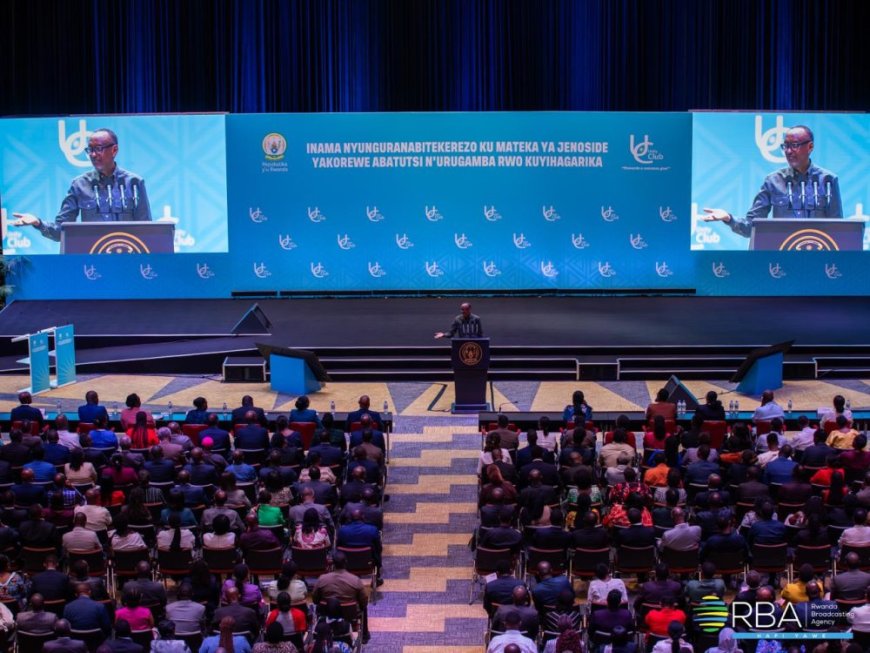
The high-level discussions focused on the historical factors that led to the 1994 Genocide against the Tutsi, the roles of its planners and perpetrators, and the subsequent liberation struggle that stopped the slaughter.
Kagame observed that a country with Rwanda's complex past will naturally generate varying narratives, often driven by self-interest, shame, or a refusal to accept responsibility.
“The history of a country like ours and what we went through contains many elements that people attempt to alter to make it what it was not, or what it should have been,” President Kagame said.
He continues;”It naturally involves many debates, which are understandable, because how one person perceives certain things is not how another does. This depends on the role they played, or their interests—even interests that might have originated in the past, even if it later becomes clear that those were not the right interests to drive people to commit certain acts in history.”
The President noted that while some historical debates are fueled by the fear that the truth will expose relatives connected to the atrocities, certain historical facts remain completely irreversible. This is especially true when backed by undeniable evidence or direct confessions from the perpetrators themselves.
“There is a truth that cannot be reversed or rewritten because of evidence. There is also evidence where some individuals openly confess, saying, 'This is it! What was said about me, what I am accused of is true,” he said.
Kagame maintained that once a perpetrator confesses to their role, external debates should cease, and the societal focus must shift to drawing lessons that foster positive behavioral transformation.
However, he warned against individuals who reject historical facts simply because the truth implicates their familial, social, or political associates.
He cautioned that this can quickly escalate from basic ignorance into active genocide denial and the justification of atrocities.
“If someone was killed, and it sounds as if you are saying, 'They deserved to die anyway! Why should they even live?'—this is a reality that we as Rwandans have faced, and we must absolutely find solutions within ourselves to confront it,” Kagame stated.
Unlike other societies that might choose to live unbothered by their past, Kagame said Rwandans do not have that luxury.
He stated that while the government has provided sufficient time and space over the last three decades for dialogue and research, this patience is not infinite, and the open space must not be weaponized to mislead the public.
The country, he stressed, has reached a definitive baseline of principles that citizens must stand by and defend.
“That is what we should live for, and it is what we would die for if necessary... That is where Rwanda is, and I want to say it to those who want it and those who don't! We persuade those who don't—imagine how much we plead! We plead until it gets tiresome, but it must reach a point where it stops.”