Life returns to Ceuta after migrant surge

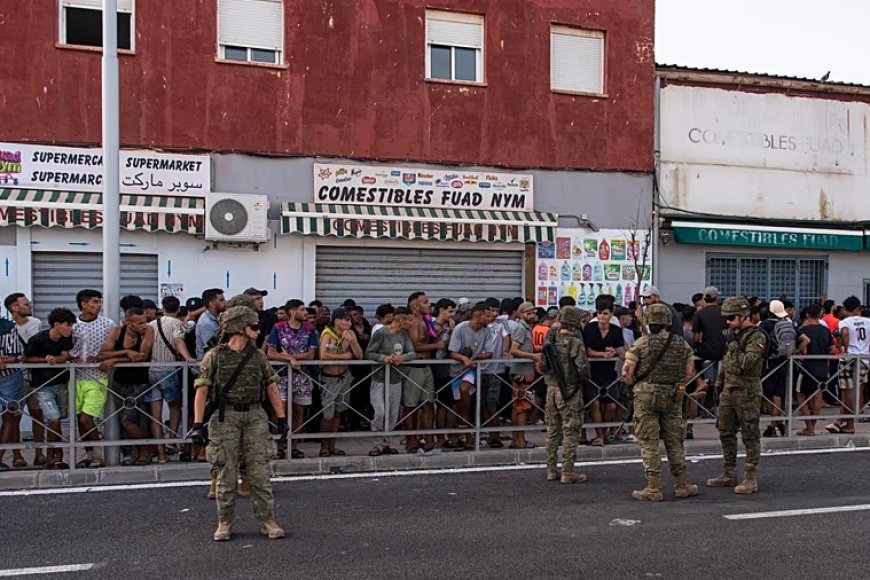
Migrants waited for a shop to open so they could buy food after crossing from Morocco into the Spanish enclave of Ceuta. Friday, July 31, 2026. Photo: Courtesy

Life returns to Ceuta after migrant surge

Aug 3, 2026 - 15:14
 0

Life in Spain's North African enclave of Ceuta began returning to normal over the weekend after almost all of the tens of thousands of migrants who entered from Morocco over several days left the territory, Spanish authorities said.


Officials said an estimated 60,000 migrants entered Ceuta from neighbouring Morocco over several days, overwhelming the Spanish enclave before later departed.

Ceuta regional president Juan Jesús Vivas said the territory had received the large influx, while Interior Minister Fernando Grande-Marlaska said nearly all of the migrants had left by Saturday.

"The situation has been almost entirely reversed," Grande-Marlaska told reporters.

Under the watch of Spanish soldiers and police on Saturday morning, the remaining young migrants continued crossing back into Morocco, AFP journalists reported.

Security personnel immediately directed back anyone who remained too long on the coastal path.

Many migrants entered Ceuta by swimming around a small border barrier extending into the Mediterranean Sea.

Grande-Marlaska said at least 67 people had died while attempting the crossing, providing updated figures on Saturday.

"We hope to go to Europe to work and earn a living. That's it," Souleye Bodian, a 19-year-old Senegalese migrant, told AFP outside a migrant centre in Ceuta, where dozens of other sub-Saharan African migrants waited for officials.

"We all know that in Africa there isn't much opportunity," he said. The sudden arrival of migrants caused political concern across Europe.

The European Union said it would hold a video meeting on Tuesday, August 4, after 22 member states issued a joint open letter on Saturday calling for an urgent meeting of interior ministers.

The countries called for a coordinated response to "prevent further uncontrolled crossings."

Italian Prime Minister Giorgia Meloni wrote on X: "Defending the external borders of the Union is not the interest of a single Nation. It is a shared responsibility of Europe."

Italy suspended its Schengen agreement with Spain, allowing visa-free movement between their borders, for one month starting on Saturday.

Spanish Prime Minister Pedro Sánchez criticised what he called the "selfish" reaction from some EU countries in a letter to the presidents of the European Commission and European Council. He supported holding a video meeting of interior ministers.

EU chief Ursula von der Leyen said on X on Saturday that the bloc needed "a lessons learned process to improve our European resilience," while noting that "not a single person reached mainland Spain or the rest of the EU" during the influx.

Madrid quickly sent additional security personnel and equipment to Ceuta, a North African territory Spain has controlled for centuries.

After spending a night walking along beaches and streets in Ceuta or sleeping on the sand, some young migrants turned back to tell officers "adios" or "goodbye" before crossing into Morocco, AFP journalists observed on Saturday.

More soldiers guarded a small beach near the border fence, standing under parasols during the morning.

Spain's Interior Ministry said a new 500-metre (1,640-foot) pneumatic barrier had been installed near the border crossing to strengthen security.


Life returns to Ceuta after migrant surge

Aug 3, 2026 - 15:14
Aug 3, 2026 - 15:15
 0
Life returns to Ceuta after migrant surge
Migrants waited for a shop to open so they could buy food after crossing from Morocco into the Spanish enclave of Ceuta. Friday, July 31, 2026. Photo: Courtesy

Life in Spain's North African enclave of Ceuta began returning to normal over the weekend after almost all of the tens of thousands of migrants who entered from Morocco over several days left the territory, Spanish authorities said.


Officials said an estimated 60,000 migrants entered Ceuta from neighbouring Morocco over several days, overwhelming the Spanish enclave before later departed.

Ceuta regional president Juan Jesús Vivas said the territory had received the large influx, while Interior Minister Fernando Grande-Marlaska said nearly all of the migrants had left by Saturday.

"The situation has been almost entirely reversed," Grande-Marlaska told reporters.

Under the watch of Spanish soldiers and police on Saturday morning, the remaining young migrants continued crossing back into Morocco, AFP journalists reported.

Security personnel immediately directed back anyone who remained too long on the coastal path.

Many migrants entered Ceuta by swimming around a small border barrier extending into the Mediterranean Sea.

Grande-Marlaska said at least 67 people had died while attempting the crossing, providing updated figures on Saturday.

"We hope to go to Europe to work and earn a living. That's it," Souleye Bodian, a 19-year-old Senegalese migrant, told AFP outside a migrant centre in Ceuta, where dozens of other sub-Saharan African migrants waited for officials.

"We all know that in Africa there isn't much opportunity," he said. The sudden arrival of migrants caused political concern across Europe.

The European Union said it would hold a video meeting on Tuesday, August 4, after 22 member states issued a joint open letter on Saturday calling for an urgent meeting of interior ministers.

The countries called for a coordinated response to "prevent further uncontrolled crossings."

Italian Prime Minister Giorgia Meloni wrote on X: "Defending the external borders of the Union is not the interest of a single Nation. It is a shared responsibility of Europe."

Italy suspended its Schengen agreement with Spain, allowing visa-free movement between their borders, for one month starting on Saturday.

Spanish Prime Minister Pedro Sánchez criticised what he called the "selfish" reaction from some EU countries in a letter to the presidents of the European Commission and European Council. He supported holding a video meeting of interior ministers.

EU chief Ursula von der Leyen said on X on Saturday that the bloc needed "a lessons learned process to improve our European resilience," while noting that "not a single person reached mainland Spain or the rest of the EU" during the influx.

Madrid quickly sent additional security personnel and equipment to Ceuta, a North African territory Spain has controlled for centuries.

After spending a night walking along beaches and streets in Ceuta or sleeping on the sand, some young migrants turned back to tell officers "adios" or "goodbye" before crossing into Morocco, AFP journalists observed on Saturday.

More soldiers guarded a small beach near the border fence, standing under parasols during the morning.

Spain's Interior Ministry said a new 500-metre (1,640-foot) pneumatic barrier had been installed near the border crossing to strengthen security.