
UN Warns 6 Million Face Hunger Emergency in Somalia

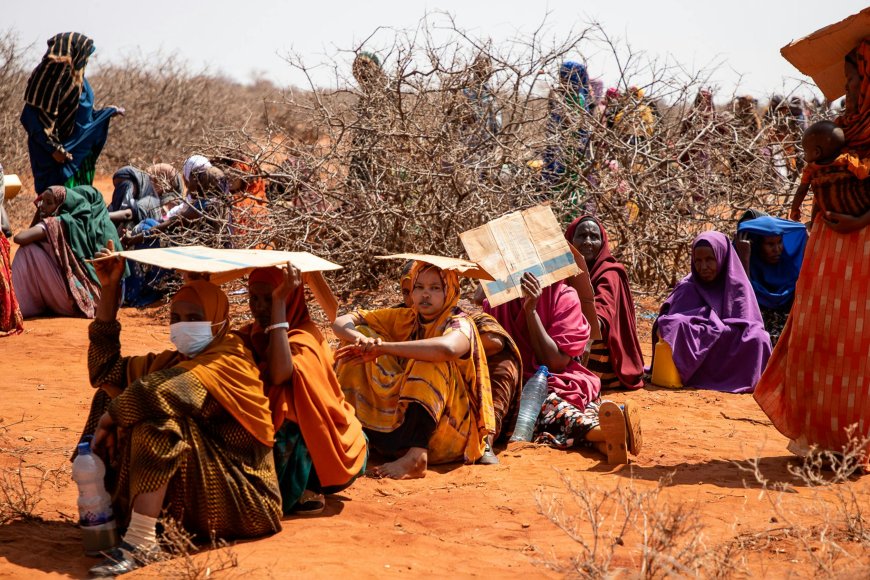
Families shield themselves from the sun in an arid region of Somalia. UN agencies warn that 6 million people now face critical food insecurity, with the country facing its first formal risk of famine since 2022. Photo: UNICEF

UN Warns 6 Million Face Hunger Emergency in Somalia

May 16, 2026 - 07:58
 0

United Nations agencies have issued a warning on Thursday, May 15, that a rapidly intensifying hunger emergency has rushed Somalia into its first confirmed famine risk since the 2022 crisis.


Compounding climate shocks, conflicts, and severe funding shortages are projected to push 6 million people—31 per cent of the population—into critical levels of acute food insecurity (IPC Phase 3 or above) between April and May 2026.

The escalating disaster has triggered one of the worst child malnutrition crises in the world, according to joint news release by The Food and Agriculture Organization (FAO), the UN Office for the Coordination of Humanitarian Affairs (OCHA), the UN Children’s Fund (UNICEF), and the UN World Food Programme (WFP).

Approximately 1.9 million children are impacted, including 493,000 who face severe acute malnutrition and are 12 times more likely to die than well-nourished children.

According to the latest Integrated Food Security Phase Classification (IPC) analysis report, the number of Somalis facing Emergency levels of hunger (IPC Phase 4) has tripled in less than a year, skyrocketing to nearly 1.9 million.

The UN identified agropastoral communities in the Burhakaba district of the Bay region as the immediate epicenter of the famine risk.

Analysts warn famine will develop if the current April-to-June Gu season rains fail, food prices continue to climb, and humanitarian aid is not urgently scaled up.

Nearly 40 per cent of children under five in Burhakaba are already acutely malnourished.

This marks the first formal famine risk analysis since 2022, when a massive scale-up of humanitarian interventions narrowly prevented catastrophe following the longest drought on record.

Humanitarian officials state the worsening crisis is driven by a toxic mix of severe drought, regional insecurity, looming riverine floods, and the effects of the conflict in the Middle East.

Maritime supply chain disruptions and rising fuel costs have driven domestic food prices up by 20 per cent, crippling household purchasing power.

Simultaneously, a massive reduction in international funding has halt the humanitarian response. 

The 2026 Somalia Humanitarian Needs and Response Plan is currently only 15.2 per cent funded, stated in WFP joint news release.

The agencies noted that the extreme funding shortfall has forced the closure of more than 500 health and nutrition facilities across Somalia. As a result, disease outbreaks are left unchecked; total measles cases nationwide doubled from January to March 2026 compared to the first quarter of 2025.

Currently, nearly 90 per cent of vulnerable people across the country are receiving little or no support, agencies shows.

While agencies are attempting to scale up operations in high-risk zones like Burhakaba, resources remain severely constrained.

What leaders say

United Nations leadership warned that a massive, immediate injection of international funding is the only way to avoid a completely preventable disaster. 

“The IPC analysis paints a stark and urgent picture, with rising numbers of malnourished children and confirmed famine risk in Burhakaba district. Without immediate and sustained support from donors, the diaspora and the private sector, we risk a preventable catastrophe unfolding before our eyes.

We must act now, at scale and without delay, to save lives and prevent the worst from happening,” says George Conway, Humanitarian Coordinator for Somalia.

Agricultural experts pointed to a combination of extreme weather and global economic shocks as the primary drivers pushing rural communities to the brink.

“The country is at a tipping point,” said FAO Somalia Representative Etienne Peterschmitt.

“The severe and prolonged drought that has devastated livelihoods, coupled with the conflict in the Middle East that has driven up food and fuel prices, and the growing risk of severe flooding linked to El Niño means that the country is at the face of a famine risk once again.”

The escalating emergency is taking a disproportionate toll on the nation's youth, prompting an immediate mobilization of frontline child survival resources.

“Across Somalia, children are facing a rapidly worsening crisis and time is running out. While communities and frontline workers remain resilient, they cannot do it alone,” said UNICEF Somalia’s Representative, Ms. Sandra Lattouf.

According to her, “UNICEF is urgently scaling up lifesaving support. With swift action, we can still save lives and uphold every child’s right to survive and thrive,”

With local survival mechanisms entirely depleted, logistics teams warned that vital food operations face an immediate shutdown without a rapid influx of support.

“We are reaching a point where any further delay could cost lives,” said Hameed Nuru, WFP's Country Director in Somalia.

“Families have exhausted their coping mechanisms, services and emergency assistance are extremely limited, and children are slipping into severe malnutrition across the country. We stand ready to scale up immediately and reach the hardest‑hit communities, but without immediate support, lifesaving assistance will run out when it is needed most,” he added.

Outlook through late 2026

The crisis is expected to stretch well into the year.

Emerging El Niño climate forecasts indicate an increased danger of severe flooding. Portions of the Shabelle River are already registering above-average flows that could intensify ahead of schedule.

Combined with insufficient funding and economic shocks, projections show that acute food insecurity and child malnutrition will remain dangerously high through late 2026.


UN Warns 6 Million Face Hunger Emergency in Somalia

May 16, 2026 - 07:58
May 16, 2026 - 14:50
 0
UN Warns 6 Million Face Hunger Emergency in Somalia
Families shield themselves from the sun in an arid region of Somalia. UN agencies warn that 6 million people now face critical food insecurity, with the country facing its first formal risk of famine since 2022. Photo: UNICEF

United Nations agencies have issued a warning on Thursday, May 15, that a rapidly intensifying hunger emergency has rushed Somalia into its first confirmed famine risk since the 2022 crisis.


Compounding climate shocks, conflicts, and severe funding shortages are projected to push 6 million people—31 per cent of the population—into critical levels of acute food insecurity (IPC Phase 3 or above) between April and May 2026.

The escalating disaster has triggered one of the worst child malnutrition crises in the world, according to joint news release by The Food and Agriculture Organization (FAO), the UN Office for the Coordination of Humanitarian Affairs (OCHA), the UN Children’s Fund (UNICEF), and the UN World Food Programme (WFP).

Approximately 1.9 million children are impacted, including 493,000 who face severe acute malnutrition and are 12 times more likely to die than well-nourished children.

According to the latest Integrated Food Security Phase Classification (IPC) analysis report, the number of Somalis facing Emergency levels of hunger (IPC Phase 4) has tripled in less than a year, skyrocketing to nearly 1.9 million.

The UN identified agropastoral communities in the Burhakaba district of the Bay region as the immediate epicenter of the famine risk.

Analysts warn famine will develop if the current April-to-June Gu season rains fail, food prices continue to climb, and humanitarian aid is not urgently scaled up.

Nearly 40 per cent of children under five in Burhakaba are already acutely malnourished.

This marks the first formal famine risk analysis since 2022, when a massive scale-up of humanitarian interventions narrowly prevented catastrophe following the longest drought on record.

Humanitarian officials state the worsening crisis is driven by a toxic mix of severe drought, regional insecurity, looming riverine floods, and the effects of the conflict in the Middle East.

Maritime supply chain disruptions and rising fuel costs have driven domestic food prices up by 20 per cent, crippling household purchasing power.

Simultaneously, a massive reduction in international funding has halt the humanitarian response. 

The 2026 Somalia Humanitarian Needs and Response Plan is currently only 15.2 per cent funded, stated in WFP joint news release.

The agencies noted that the extreme funding shortfall has forced the closure of more than 500 health and nutrition facilities across Somalia. As a result, disease outbreaks are left unchecked; total measles cases nationwide doubled from January to March 2026 compared to the first quarter of 2025.

Currently, nearly 90 per cent of vulnerable people across the country are receiving little or no support, agencies shows.

While agencies are attempting to scale up operations in high-risk zones like Burhakaba, resources remain severely constrained.

What leaders say

United Nations leadership warned that a massive, immediate injection of international funding is the only way to avoid a completely preventable disaster. 

“The IPC analysis paints a stark and urgent picture, with rising numbers of malnourished children and confirmed famine risk in Burhakaba district. Without immediate and sustained support from donors, the diaspora and the private sector, we risk a preventable catastrophe unfolding before our eyes.

We must act now, at scale and without delay, to save lives and prevent the worst from happening,” says George Conway, Humanitarian Coordinator for Somalia.

Agricultural experts pointed to a combination of extreme weather and global economic shocks as the primary drivers pushing rural communities to the brink.

“The country is at a tipping point,” said FAO Somalia Representative Etienne Peterschmitt.

“The severe and prolonged drought that has devastated livelihoods, coupled with the conflict in the Middle East that has driven up food and fuel prices, and the growing risk of severe flooding linked to El Niño means that the country is at the face of a famine risk once again.”

The escalating emergency is taking a disproportionate toll on the nation's youth, prompting an immediate mobilization of frontline child survival resources.

“Across Somalia, children are facing a rapidly worsening crisis and time is running out. While communities and frontline workers remain resilient, they cannot do it alone,” said UNICEF Somalia’s Representative, Ms. Sandra Lattouf.

According to her, “UNICEF is urgently scaling up lifesaving support. With swift action, we can still save lives and uphold every child’s right to survive and thrive,”

With local survival mechanisms entirely depleted, logistics teams warned that vital food operations face an immediate shutdown without a rapid influx of support.

“We are reaching a point where any further delay could cost lives,” said Hameed Nuru, WFP's Country Director in Somalia.

“Families have exhausted their coping mechanisms, services and emergency assistance are extremely limited, and children are slipping into severe malnutrition across the country. We stand ready to scale up immediately and reach the hardest‑hit communities, but without immediate support, lifesaving assistance will run out when it is needed most,” he added.

Outlook through late 2026

The crisis is expected to stretch well into the year.

Emerging El Niño climate forecasts indicate an increased danger of severe flooding. Portions of the Shabelle River are already registering above-average flows that could intensify ahead of schedule.

Combined with insufficient funding and economic shocks, projections show that acute food insecurity and child malnutrition will remain dangerously high through late 2026.