 English
 Kinyarwanda
US, Iran Agree to 60-Day Peace Roadmap After High-Level Switzerland Talks

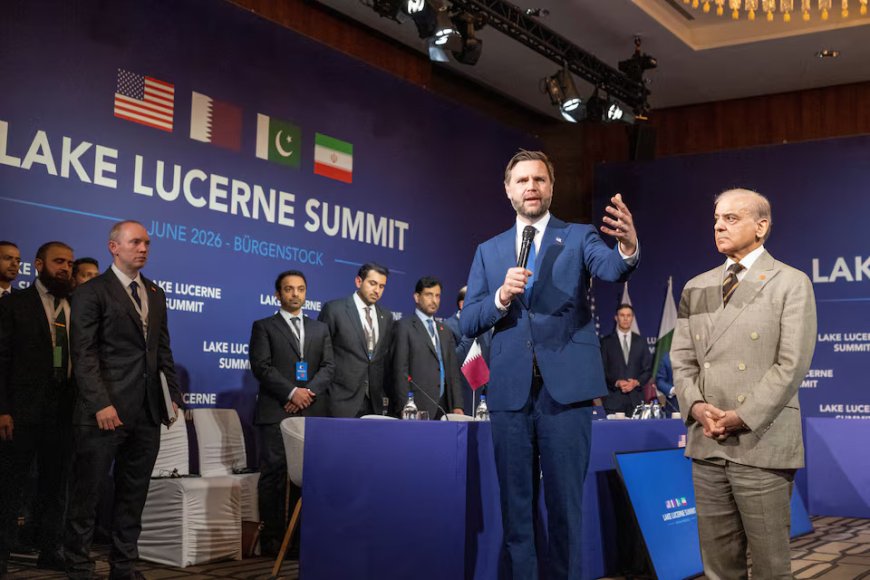
United States and Iranian officials have agreed to a strategic roadmap aimed at ending their war within 60 days, following high-level diplomatic talks in Switzerland that concluded early Monday, June 22.
Mediators Pakistan and Qatar announced that the two sides made "encouraging progress" during the initial round of talks.
The parties established a mechanism to halt fighting between Israel and Iran-aligned Hezbollah militants in Lebanon and opened a direct communications line to ensure safe passage through the critical Strait of Hormuz shipping route.
Global markets reacted immediately to the diplomatic breakthrough.
Benchmark Brent crude oil prices dropped below $80 per barrel as supply shortage fears eased.
Concurrently, commercial shipping began to resume as a second container ship stopped at Iran's Shahid Rajaee port to load cargo following the lifting of the U.S. maritime blockade.
Despite the breakthrough, extreme tensions overshadowed the negotiations.
The talks got off to a rocky start after Tehran temporarily shut down the Strait of Hormuz over the weekend, prompting U.S. President Donald Trump to warn Iranian officials via Fox News that "you won't have a country" if the blockade was restored.
Trump also reiterated threats that the U.S. would take over the waterway and charge a transit toll.
Iran's semi-official Tasnim news agency reported that the Iranian delegation briefly refused to enter the negotiating room after Trump's comments became public, demanding the immediate release of frozen assets and oil export waivers before discussing nuclear matters.
However, U.S. sources disputed the report of a walkout.
"The Iranians never left and are still here meeting and negotiating deep into the night," a U.S. diplomat involved in the talks told Reuters. "We’ve talked about the Strait, Lebanon, nuclear issues, and details of implementing the MOU, among other topics."
U.S. Vice President JD Vance, who spearheaded the discussions on Sunday, June 21 under a weak April ceasefire agreement, downplayed the friction surrounding the ongoing violence in Lebanon.
"These things are always a little bit messy," Vance told reporters, adding that Trump had "asked us to turn over a new leaf to transform our relationship with the people of Iran."
Another U.S. diplomat noted that late-night discussions included “clarifying some of the confusing messaging from Iran on the Strait and building deconfliction mechanisms to ensure the Strait will remain fully open.”
Iranian Foreign Minister Abbas Araqchi stated on social media that Tehran successfully secured oil and petrochemical export waivers, the release of certain frozen assets, and a national reconstruction plan as part of the interim terms.
The war originally broke out on February 28 with joint U.S.-Israeli attacks on Iran. While maritime traffic through the strait had dropped sharply to just five vessels on Sunday according to data from analytics firm Kpler, Sunday night marked a rare period of relative calm with no major violence reported in Lebanon.
Reacting to the development, Israeli President Isaac Herzog stated on Monday that Israel is not opposed to a diplomatic resolution. However, Herzog warned that any final agreement must ensure Tehran cannot use incoming funds for military purposes or to support regional proxies.
Technical meetings between the U.S. and Iranian delegations are scheduled to continue in Switzerland throughout the week to finalize the details of the peace roadmap.