 English
 Kinyarwanda
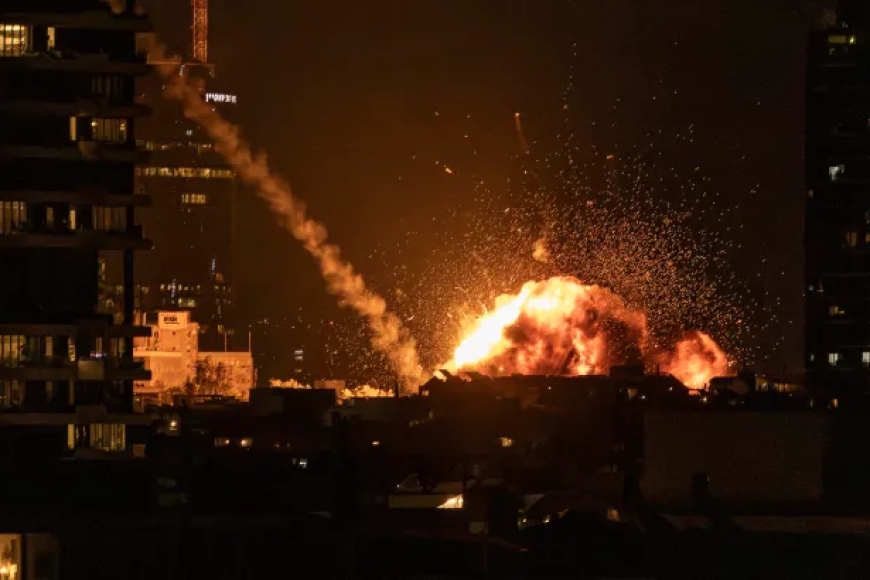
What are the Major Threat Scenarios Emerging from Joint US–Israel Strikes on Iran?
As coordinated airstrikes hit Tehran, experts warn of regional escalation, civilian suffering, and rising risks for foreign nationals.
The Washington-based Counter Threat Centre has identified four major threat scenarios that could unfold in the aftermath of the joint strikes, warning that the situation risks spiralling far beyond a limited military confrontation.
The strikes follow the reported collapse of diplomatic talks between Washington and Tehran on February 26. Those discussions, centred on nuclear program limitations and sanctions relief, ended without progress—raising tensions that have now spilled into open military confrontation.
1. Regional Escalation Through Iranian Proxies
Analysts warn that airstrikes on Tehran are almost certain to draw Iran’s regional allies into the conflict. Armed groups aligned with Tehran—including Hezbollah in Lebanon, Hamas in Gaza, and the Houthis in Yemen—are expected to respond.
Retaliatory strikes targeting Israeli leadership, defence infrastructure, and strategic assets could transform the conflict into a multi-front confrontation. Tit-for-tat attacks risk triggering a large-scale regional crisis, destabilising neighbouring states and drawing in additional actors.
For civilians across the Middle East, this could mean a prolonged period of insecurity, air raid sirens, and mounting uncertainty.
2. Civilian Impact and Humanitarian Strain
Beyond the geopolitical calculations, the human toll inside Tehran could be severe.
Strikes on central districts risk damaging critical infrastructure, including schools and hospitals. Emergency responders may struggle to access impacted areas if roads, transport systems, or communication networks are disrupted.
Large-scale evacuations to the outskirts of the city could overwhelm public transport and create chaotic conditions, increasing the risk of injuries in overcrowded transit points. Hospitals, already strained by potential casualties, may face shortages of supplies and staff.
Should medical capacity become overwhelmed, civilians may attempt to seek treatment in neighbouring countries, placing additional pressure on regional health systems.
For families in Tehran, the immediate reality is not strategic positioning—but fear, displacement, and uncertainty about what comes next.
3. Rising Risks for US Nationals
The escalation also heightens the risk for US nationals in Iran and across the region.
Experts warn that retaliatory measures could include opportunistic violence, detentions, or hostage-taking aimed at gaining leverage in potential negotiations. Areas known to host foreign nationals could become flashpoints.
Any targeting of civilians would complicate evacuation efforts and disrupt repatriation plans. Communication restrictions, should detentions occur, could further reduce international awareness and delay diplomatic intervention.
US military bases in the Gulf—including those in Qatar, Kuwait, and Bahrain—could also face heightened security threats as tensions intensify.
4. Political Uncertainty and Opposition Speculation
The strikes have reignited speculation about Iran’s political future, including the possible role of opposition figure Reza Pahlavi.
In the short term, analysts consider a rapid political transition unlikely, citing the entrenched authority of the Islamic Revolutionary Guard Corps (IRGC) and uncertainty over regime stability.
However, sustained military pressure, economic deterioration, and potential internal fragmentation could reshape the political landscape over time. Should internal cohesion weaken, opposition figures may attempt to position themselves as alternatives in a post-crisis scenario.
A Region on Edge
The immediate impact of the strikes extends across multiple layers of society: Iranian leadership and government institutions, emergency and medical responders, Tehran residents, Israeli civilians, US personnel, and Gulf populations who may find themselves drawn into the expanding crisis.
What began as targeted air operations now carries the weight of broader consequences—military, humanitarian, and political.
For ordinary citizens across the region, the question is no longer whether tensions will rise, but how far this escalation will go—and at what human cost.