
Somalia’s Starving Children Face Death as Iran War Blocks Lifesaving Aid

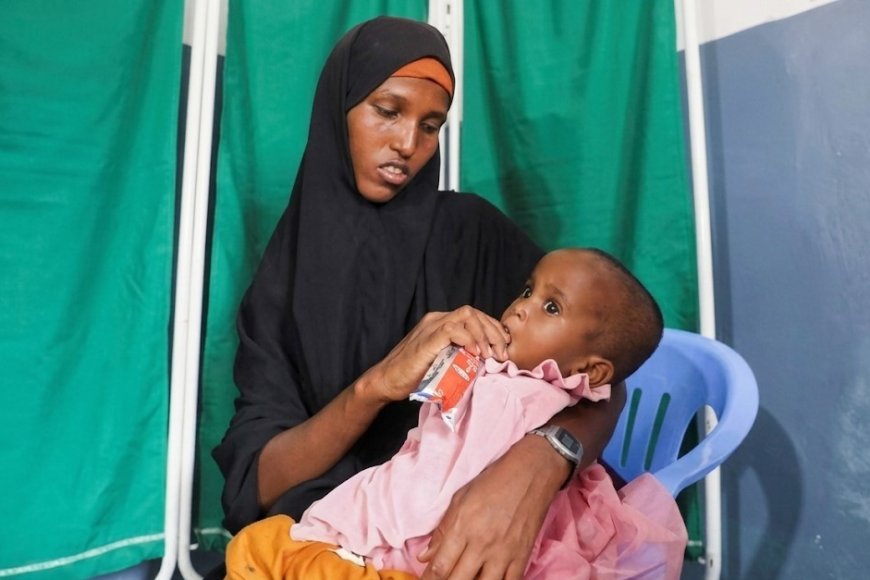
Fatima Mohamed feed Iqlas Omar Abdi, 1, with nutritious supplementary biscuit at the Daynile hospital. Photo by Reuters

Somalia’s Starving Children Face Death as Iran War Blocks Lifesaving Aid

Apr 28, 2026 - 21:01
 0

Half a million children under 5 severely malnourished in Somalia are facing a “matter of life and death” as the U.S.-Israeli war on Iran triggers critical shortages of therapeutic food and a 150 per cent spike in local fuel prices, Reuters reports.


The conflict has crippled global shipping routes and worsened a funding crisis, forcing clinics in cities like Baidoa and Mogadishu to share supplies or turn away “wasting” children.

According to the IPC global hunger monitor, more than 2 million people in Somalia are now in the “Emergency” phase, just one level before famine.

Since the United States (U.S.) and Israel attacked Iran on February 28 and Tehran closed the Gulf entrance, shipping times for lifesaving supplies have nearly doubled. Deliveries of therapeutic milk and ready-to-use therapeutic food (RUTF) from Europe, which took 30–35 days in 2024, now take up to 65 days.

“Since the needs are large and we don't have a lot of supplies, we have had to keep reducing the amount we give children,” said nurse Hassan Yahye Kheyre.

The International Rescue Committee (IRC) warns that the 225 cartons of peanut paste remaining at Kheyre’s clinic—which treats 1,200 children—will likely vanish within two weeks.

Kheyre added: “If treatment is on-and-off, the children will become very weak, physically and mentally. And it may not be possible to reverse it.”

Financial constraints have deepened the crisis.

CARE International reports that the cost of a single carton of therapeutic food has surged from $55 to $200.

In Baidoa, mother-of-nine Muumino Adan Aamin has been turned away twice while seeking peanut paste for her 11-month-old daughter, Ruweido. Aamin previously nearly lost another daughter to the 2017 drought, describing her then as “Just bone and skin.”

Now, a new drought has left one in three Somalis facing acute hunger.

At Daynile General Hospital, health and nutrition supervisor Xafsa Ali Hassan confirmed the terrible situation on April 20, stating: “Some children's nutritional status has already worsened.”

Aid cuts and funding gaps

The humanitarian response is collapsing under the weight of drastic budget cuts, particularly from the United States. Somalia was excluded from a recent U.N. Coordination of Humanitarian Affairs (OCHA) funding allocation, leading to the closure of over 200 health facilities.

OCHA has appealed for $852 million to stave off famine—a sharp decrease from the $1.42 billion requested last year—yet only 14 per cent of that amount has been received.

“Somalia is really hard hit by the Iran war because people are still reeling from the impact of the previous drought,” said Shukri Abdulkadir, IRC’s Somalia coordinator. “It's very difficult for people to absorb these shocks.”

Admissions for severe acute malnutrition rose by 35 per cent in the first quarter of this year. Experts warn that if funding gaps persist, the number of untreated, severely malnourished children could reach 150,000.

Somalia’s Starving Children Face Death as Iran War Blocks Lifesaving Aid

Apr 28, 2026 - 21:01
 0
Somalia’s Starving Children Face Death as Iran War Blocks Lifesaving Aid
Fatima Mohamed feed Iqlas Omar Abdi, 1, with nutritious supplementary biscuit at the Daynile hospital. Photo by Reuters

Half a million children under 5 severely malnourished in Somalia are facing a “matter of life and death” as the U.S.-Israeli war on Iran triggers critical shortages of therapeutic food and a 150 per cent spike in local fuel prices, Reuters reports.


The conflict has crippled global shipping routes and worsened a funding crisis, forcing clinics in cities like Baidoa and Mogadishu to share supplies or turn away “wasting” children.

According to the IPC global hunger monitor, more than 2 million people in Somalia are now in the “Emergency” phase, just one level before famine.

Since the United States (U.S.) and Israel attacked Iran on February 28 and Tehran closed the Gulf entrance, shipping times for lifesaving supplies have nearly doubled. Deliveries of therapeutic milk and ready-to-use therapeutic food (RUTF) from Europe, which took 30–35 days in 2024, now take up to 65 days.

“Since the needs are large and we don't have a lot of supplies, we have had to keep reducing the amount we give children,” said nurse Hassan Yahye Kheyre.

The International Rescue Committee (IRC) warns that the 225 cartons of peanut paste remaining at Kheyre’s clinic—which treats 1,200 children—will likely vanish within two weeks.

Kheyre added: “If treatment is on-and-off, the children will become very weak, physically and mentally. And it may not be possible to reverse it.”

Financial constraints have deepened the crisis.

CARE International reports that the cost of a single carton of therapeutic food has surged from $55 to $200.

In Baidoa, mother-of-nine Muumino Adan Aamin has been turned away twice while seeking peanut paste for her 11-month-old daughter, Ruweido. Aamin previously nearly lost another daughter to the 2017 drought, describing her then as “Just bone and skin.”

Now, a new drought has left one in three Somalis facing acute hunger.

At Daynile General Hospital, health and nutrition supervisor Xafsa Ali Hassan confirmed the terrible situation on April 20, stating: “Some children's nutritional status has already worsened.”

Aid cuts and funding gaps

The humanitarian response is collapsing under the weight of drastic budget cuts, particularly from the United States. Somalia was excluded from a recent U.N. Coordination of Humanitarian Affairs (OCHA) funding allocation, leading to the closure of over 200 health facilities.

OCHA has appealed for $852 million to stave off famine—a sharp decrease from the $1.42 billion requested last year—yet only 14 per cent of that amount has been received.

“Somalia is really hard hit by the Iran war because people are still reeling from the impact of the previous drought,” said Shukri Abdulkadir, IRC’s Somalia coordinator. “It's very difficult for people to absorb these shocks.”

Admissions for severe acute malnutrition rose by 35 per cent in the first quarter of this year. Experts warn that if funding gaps persist, the number of untreated, severely malnourished children could reach 150,000.