
Why women’s leadership must define global crisis response

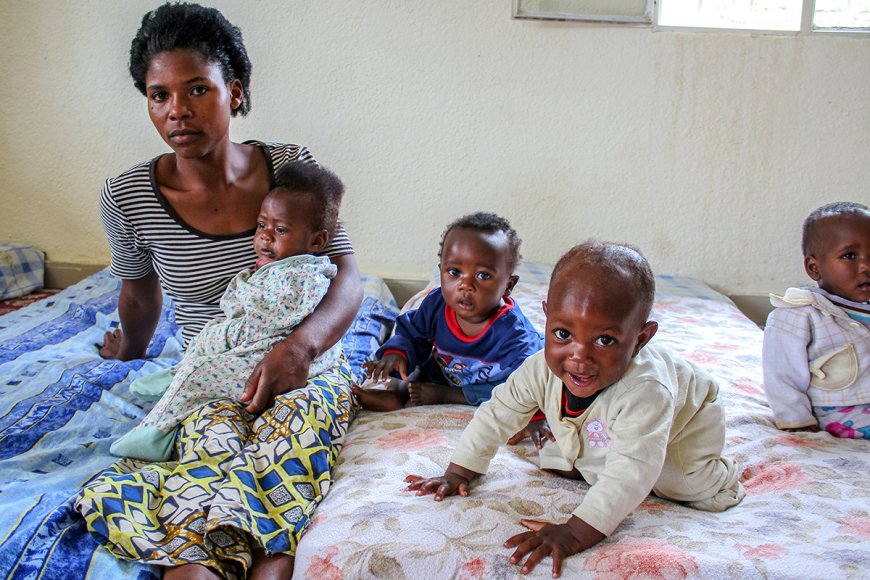
Adno-and-her-children-at-home-with-midwife-Hani-Karkar-region. Photo by Save the Children

Why women’s leadership must define global crisis response

Apr 2, 2026 - 12:33
 0

After 26 years of navigating tin-hut airports, dirt runways, and chaotic displacement camps, Claire Sanford, the Director of Conflict and Humanitarian at Save the Children UK, is calling for a fundamental shift in how the world responds to disaster.


 Sanford argues that the future of humanitarian aid must be shaped not just by systems, but by the leadership and lived experiences of the women and girls at the center of conflict.

From the frontlines of Sudan to the streets of Syria, Sanford noted that while resilience is often praised, it is the structural inequality that remains the greatest barrier.

Her observations, published by the Humanitarian Leadership Academy in March, suggest that global policies often overlook the specific ambitions and impossible choices faced by those surviving on the edges of the world's most difficult crises.

The veteran humanitarian explained that these personal accounts are more than just reflections of hardship; they are a necessary blueprint for more effective international action. By placing the perspectives of affected communities at the heart of decision-making, Sanford contends that the humanitarian sector can move beyond mere survival toward ensuring safety and dignity for millions.

During her time in the field, Sanford has gathered stories that illustrate the high cost of this missing support. In a dusty camp on the border of Sudan last year, she met a 14-year-old girl whose education was cut short by war. Despite the conflict, the teenager remained focused on her dream of becoming a public health worker to “help rebuild her country.”

In Somalia, Sanford encountered a mother in a Baidoa nutrition center who had walked more than 60 miles in intense heat. She was carrying a severely malnourished two-year-old daughter and a four-month-old son.

“Her journey speaks not only to her determination, but to the absence of accessible support that should have been there for her from the start,” Sanford observed.

The challenges extend to Syria, where a mother in Aleppo shared the guilt of returning home from Turkey in late 2024. Instead of the stability she hoped for, she found a reality without electricity or heating, where soaring prices forced her family to survive on bread and water.

Sanford also highlighted the dreams of injured children in conflict zones. Many simply wish to walk again, to play football, or to dance—desires she says should never have been stolen by the remnants of war.

“It is a stark reminder that children must be placed at the centre of how wars are fought, regulated, and responded to so that weapons no longer define the shape of childhood,” Sanford stated.

According to Sanford, these patterns of courage and collective determination are shared by women across continents.

She noted that while some countries have made progress in fighting inequality, many others have stalled, leaving women to face extreme conditions with limited safety or opportunity.

This focus on grassroots action is not a new concept for the humanitarian community. Sanford pointed to the foundations of Save the Children, established after the First World War by sisters Eglantyne Jebb and Dorothy Buxton. The duo refused to look away from starving children in Europe, choosing to act when many remained silent.

Today, that same attitude is reflected in the International Women’s Day 2026 theme, “Give to Gain.” Sanford argued that this theme is a reality she sees daily, where those with the least continue to lead and adapt despite significant barriers.

“The International Women’s Day 2026 theme Give to Gain is not just an idea but rather it is something I have seen lived out repeatedly,” Sanford said. “Their insight, strength, and lived experience must shape how we act.”

For those working in policy and advocacy, Sanford suggested that these individual stories provide clarity amidst the complexity of global emergencies. She argued that statistics and interventions must be grounded in the reality of human dignity.

“They remind us that behind every decision, every policy, every intervention, every statistic, there are real lives full of hope, ambition, and dignity, and that our responsibility is to ensure those realities shape what we do,” she said.


Why women’s leadership must define global crisis response

Apr 2, 2026 - 12:33
Apr 2, 2026 - 12:53
 0
Why women’s leadership must define global crisis response
Adno-and-her-children-at-home-with-midwife-Hani-Karkar-region. Photo by Save the Children

After 26 years of navigating tin-hut airports, dirt runways, and chaotic displacement camps, Claire Sanford, the Director of Conflict and Humanitarian at Save the Children UK, is calling for a fundamental shift in how the world responds to disaster.


 Sanford argues that the future of humanitarian aid must be shaped not just by systems, but by the leadership and lived experiences of the women and girls at the center of conflict.

From the frontlines of Sudan to the streets of Syria, Sanford noted that while resilience is often praised, it is the structural inequality that remains the greatest barrier.

Her observations, published by the Humanitarian Leadership Academy in March, suggest that global policies often overlook the specific ambitions and impossible choices faced by those surviving on the edges of the world's most difficult crises.

The veteran humanitarian explained that these personal accounts are more than just reflections of hardship; they are a necessary blueprint for more effective international action. By placing the perspectives of affected communities at the heart of decision-making, Sanford contends that the humanitarian sector can move beyond mere survival toward ensuring safety and dignity for millions.

During her time in the field, Sanford has gathered stories that illustrate the high cost of this missing support. In a dusty camp on the border of Sudan last year, she met a 14-year-old girl whose education was cut short by war. Despite the conflict, the teenager remained focused on her dream of becoming a public health worker to “help rebuild her country.”

In Somalia, Sanford encountered a mother in a Baidoa nutrition center who had walked more than 60 miles in intense heat. She was carrying a severely malnourished two-year-old daughter and a four-month-old son.

“Her journey speaks not only to her determination, but to the absence of accessible support that should have been there for her from the start,” Sanford observed.

The challenges extend to Syria, where a mother in Aleppo shared the guilt of returning home from Turkey in late 2024. Instead of the stability she hoped for, she found a reality without electricity or heating, where soaring prices forced her family to survive on bread and water.

Sanford also highlighted the dreams of injured children in conflict zones. Many simply wish to walk again, to play football, or to dance—desires she says should never have been stolen by the remnants of war.

“It is a stark reminder that children must be placed at the centre of how wars are fought, regulated, and responded to so that weapons no longer define the shape of childhood,” Sanford stated.

According to Sanford, these patterns of courage and collective determination are shared by women across continents.

She noted that while some countries have made progress in fighting inequality, many others have stalled, leaving women to face extreme conditions with limited safety or opportunity.

This focus on grassroots action is not a new concept for the humanitarian community. Sanford pointed to the foundations of Save the Children, established after the First World War by sisters Eglantyne Jebb and Dorothy Buxton. The duo refused to look away from starving children in Europe, choosing to act when many remained silent.

Today, that same attitude is reflected in the International Women’s Day 2026 theme, “Give to Gain.” Sanford argued that this theme is a reality she sees daily, where those with the least continue to lead and adapt despite significant barriers.

“The International Women’s Day 2026 theme Give to Gain is not just an idea but rather it is something I have seen lived out repeatedly,” Sanford said. “Their insight, strength, and lived experience must shape how we act.”

For those working in policy and advocacy, Sanford suggested that these individual stories provide clarity amidst the complexity of global emergencies. She argued that statistics and interventions must be grounded in the reality of human dignity.

“They remind us that behind every decision, every policy, every intervention, every statistic, there are real lives full of hope, ambition, and dignity, and that our responsibility is to ensure those realities shape what we do,” she said.