 English
 Kinyarwanda

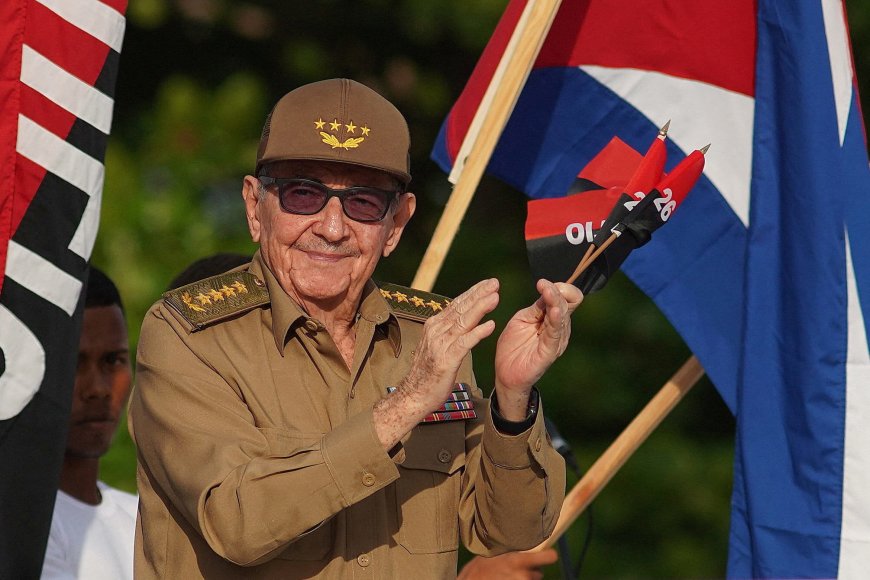
US Charges Cuba’s Raúl Castro With Murder

The United States has charged former Cuban President Raúl Castro with murder over the 1996 shooting down of two American exile planes, marking a massive escalation in Washington’s pressure campaign against the island's communist government.
The federal indictment marks a historic low point in relations between the longtime Cold War rivals.
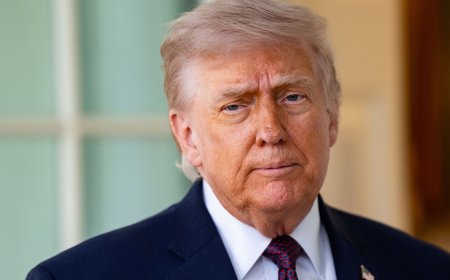
It comes as U.S. President Donald Trump pushes heavily for regime change in Cuba, where communists have held power since the 1959 revolution led by Castro’s late brother, Fidel.
Castro, 94, faces one count of conspiracy to kill U.S. nationals, four counts of murder, and two counts of destruction of aircraft.
Five Cuban military fighter pilots were also charged.
The counts stem from a 1996 incident where Cuban jets shot down two small aircraft operated by the Miami-based exile group Brothers to the Rescue, killing all four people on board.
While it is rare for the U.S. to file criminal charges against foreign leaders, the move aligns with an aggressive U.S. push in the Western Hemisphere.
The indictment follows the January 3 U.S. capture of Venezuelan President Nicolas Maduro on drug trafficking charges.
Speaking at a Coast Guard Academy event in New London, Connecticut, on Wednesday, President Trump asserted American influence in the region.
“From the shores of Havana to the banks of the Panama Canal, we will drive out the forces of lawlessness and crime and foreign encroachment,” Trump said.
In Miami, acting Attorney General Todd Blanche announced the charges at a ceremony honoring the victims: Carlos Costa, Armando Alejandre Jr., Mario de la Peña, and Pablo Morales.
Blanche did not directly answer whether the U.S. military would attempt to arrest Castro, who remains on the island with no signs of extradition. However, Blanche made it clear that Washington expects him to face a U.S. court.
“There was a warrant issued for his arrest, so we expect that he will show up here by his own will or by another way,” Blanche told a packed auditorium of officials and Cuban-Americans.
Cuban President Miguel Diaz-Canel strongly rejected the indictment, stating on social media that Cuba acted legitimately to defend its territory.
He warned that the U.S. is using the charges to justify a dangerous military intervention.
“It is a political maneuver, devoid of any legal foundation,” Diaz-Canel said in a post on X.
He previously stated on Monday that the island does not represent a threat to the U.S.
The escalating pressure campaign heavily reflects the legacy of Secretary of State Marco Rubio, the son of Cuban immigrants and a possible 2028 Republican presidential contender.
Rubio's assertive approach contrasts with his chief Republican rival, Vice President JD Vance, a former Marine who opposes U.S. involvement in foreign wars.
Under the Trump administration, the U.S. has effectively blockaded Cuba by penalizing countries that supply it with fuel, triggering severe power outages and its worst economic crisis in decades.
Earlier on Wednesday, Rubio offered Cuba $100 million in parallel aid while blaming its communist leaders for severe shortages of food, fuel, and electricity.
Cuban Foreign Minister Bruno Rodriguez called the aid offer pessimistic, pointing to the “devastating effect” of the ongoing economic blockade.
Cuba Defends Downing of Planes, Cites Airspace Violation
Raúl Castro, remains a powerful behind-the-scenes force in Cuba.
He was a central figure in the guerrilla war that overthrew dictator Fulgencio Batista, helped defeat the U.S.-backed Bay of Pigs invasion in 1961, and served as president from 2008 to 2018.
He was serving as defense minister during the 1996 shootdown. While Brothers to the Rescue stated their mission was to search for fleeing Cuban to search for Cuban migrants fleeing the island, Cuba claimed the planes violated its airspace.
Fidel Castro previously stated the military acted on standing orders, and that Raúl did not give a specific command to fire.
However, an investigation by the International Civil Aviation Organization later concluded that the exile planes were shot down over international waters.