 English
 Kinyarwanda
US Imposes New Tariffs on 60 Trading Partners Over Forced Labor Claims
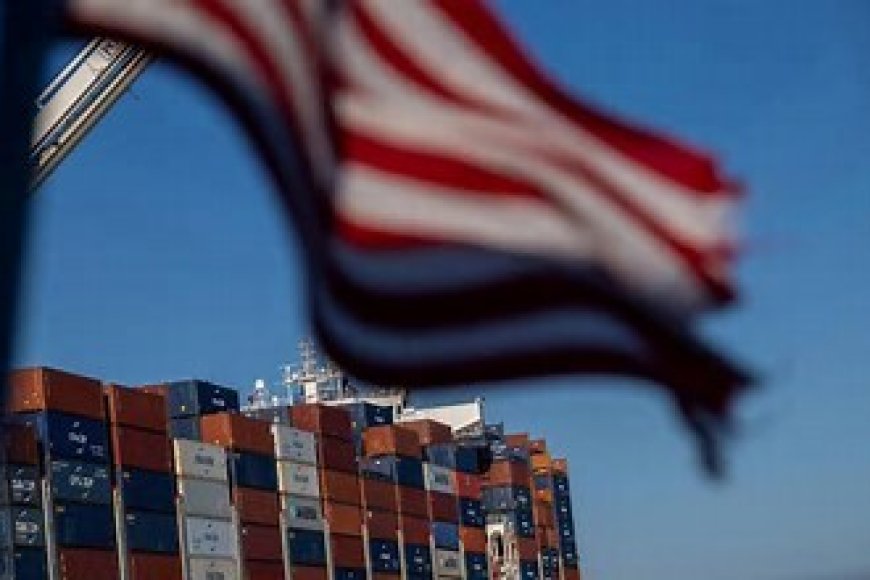
The Trump administration on Friday, July 24 imposed new tariffs of 10 percent and 12.5 percent on goods from 60 trading partners, including China and the European Union, as it moved to preserve a near-global tariff system after the U.S. Supreme Court struck down President Donald Trump's earlier “reciprocal” duties.
The new tariffs took effect at midi night, exactly as the administration's temporary 10 percent global tariff expired after 150 days. Goods already in transit are exempt until July 28.
The White House said the new duties were aimed at countries it accuses of failing to adequately enforce bans on imports linked to forced labor.
The tariffs cover 99.4 percent of U.S. imports, although oil and gas, fertilizer and certain food products are among the exemptions.
“The United States has had a forced labor import ban for nearly a century, and rigorously enforces it. It’s well past time for our trading partners to do the same,” U.S. Trade Representative Jamieson Greer said in a statement.
“Today’s action will begin to correct what is both a human rights abuse and distortive trade practice to improve the welfare of workers everywhere.”
The tariffs were imposed under Section 301 of the Trade Act of 1974, a legal route that allows the administration to maintain a tariff floor on almost all U.S. imports following the Supreme Court's February decision against Trump's use of a national emergencies law to impose tariffs ranging from 10 percent to 50 percent.
The new measure is expected to face less legal risk because Section 301 has survived previous court challenges.
The United States imposed a 10 percent tariff on goods from Argentina, Bangladesh, Britain, Cambodia, Canada, Ecuador, El Salvador, Guatemala, Honduras, India, Indonesia, Jordan, Malaysia, Mexico, Pakistan, Sri Lanka and Trinidad and Tobago.
The European Union, Taiwan, Japan, South Korea and Switzerland were assigned rates that, when combined with existing most-favored-nation tariffs, total 10 percent or 12.5 percent. The remaining 38 countries were assigned a 12.5 percent rate.
Among them is Vietnam, which this week issued new rules detailing its ban on goods made with forced labor. China was also included despite rejecting U.S. allegations that Uyghur minorities have been detained in work camps.
The tariffs have drawn criticism from trade partners, many of whom disputed the justification for the U.S. investigation. Some, however, said the new duties would have little practical impact because of existing tariff agreements.
The European Union said the new rates respected tariff ceilings agreed with Washington.
“The EU notes positively the fact that this outcome is in line with the U.S. tariff commitments agreed under the EU-U.S. Joint Statement,” a European Commission spokesperson said, adding that the move could help advance discussions on further exemptions and closer cooperation.
Switzerland also disputed the allegations behind the investigation but said Washington had respected previous commitments limiting tariffs to as much as 12.5.
Britain said the move would not harm its businesses.
“There is no negative change to the tariff rate facing UK businesses as a result of this announcement. Our agreement with the U.S. remains in place, and today we see an improvement to our trading terms with zero tariffs on whisky and medical technology,” a government spokesperson said.
The announcement also comes as Washington seeks to rebuild tariffs on Chinese goods. U.S. officials have told Chinese counterparts that they intend to restore Trump's second-term tariffs to the 20 percent level agreed in a November 2025 trade truce with President Xi Jinping, but not raise them above that level.
Before Friday's action, China's tariff rate had fallen to 10 percent, excluding a separate 25 percent tariff imposed during Trump's first term on industrial goods.
Financial markets showed little immediate reaction to the new tariffs, with investor attention focused largely on the conflict in the Middle East.